New FHA Guidelines Help More Borrowers Buy Their Dream Home
New FHA guidelines make more home owner dreams come true.
A low FICO score spells doom for prospective home buyers. Or at least that's the way that it has been. But new FHA guidelines not only relax the standards a bit, they make home loans accessible to people who never could have qualified just a few short years ago.
With a policy shift that happened in August, the Federal Housing Administration now gives lenders more freedom to consider people who have the ability to pay but whose FICO score might not reflect it. Lenders have technically always had that freedom. But now there are no penalties for exercising it.
Here's how the new relaxed standards came to be and how they might affect buyers in your area:
You can't build credit if you can't get credit.
Getting Credit Hasn't Been Easy
When the economy bottomed out almost a decade ago, lenders tightened their guidelines on who could and couldn't qualify for a home loan. People lost jobs, credit scores suffered damage, and overall lending was down.
What the new policy offers is a wider range of acceptable scores. Where no one whose score fell in the 500s, and few with a score under 640, had a shot at home ownership with an FHA insured loan, now lenders can broaden their horizons.This could equal as many as 100,000 new home loans each year, according to the Real Deal.
FHA Couldn't Make up its Mind
The Federal Housing Administration has been a bit of a conundrum with home loans. Their own guidelines accepted applicants with scores as low as in the 500s. But that doesn't mean many, if any, of those hypothetical loans made it to underwriting. The policy had a major negative effect on first-time home buyers and minorities.
Most lenders wouldn't think of extending credit to buyers with low credit scores, even though the loans would have been FHA backed and FHA accepted those lower scores. The problem was FHA penalties. If a lender makes too many high risk loans, says the Real Deal, FHA can penalize the lending institution. Fortunately that tide is changing.
After overcoming financial struggles, many prospective buyers want home ownership too much to put it at risk.
Financial Experts Agree that More People are Risk Worthy
The economy improving, and the reasons behind the lender lockdowns are dwindling. Harney explains that with a good debt-to-income ratio and the ability to repay the loan, more lenders are available for people with a less-than-perfect FICO score. This means people whose score dropped because they lost a job aren't necessarily barred if they've gotten back on track.
And many of the same people aren't just less risky than before, they're considered good credit risks. After the recession, they're working hard, saving money, and want the dream of home ownership. Potomac Partners consulting firm principal, Brian Chappelle, told Harney that compared to FHA loans overall, those whose applicants had lower scores are performing as good or better.
The economy is getting better. And along with it, families are standing on stable ground, ready to invest in their future. With the newly relaxed FHA guidelines, more people can finally find their dream home. If you're ready to put yours on the market, that means a bigger potential buyer pool.
Wondering about your home's value and whether it's worth your while to sell? A value estimate through eppraisal can set your mind at ease. It only takes a minute, and what you'll learn can help you make the right decisions for your life. Get your free property valuation today.
The Factual Summary
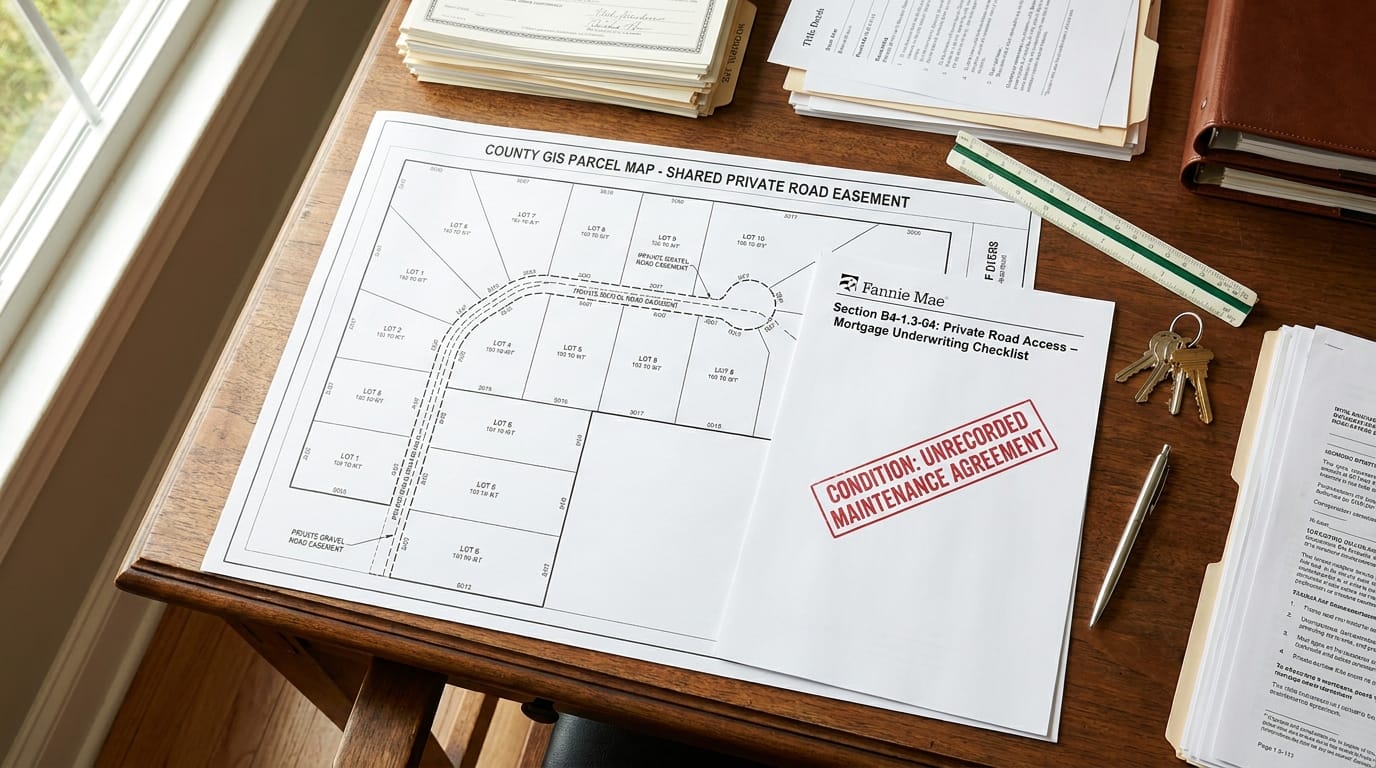
Buying a home on a private road or shared driveway comes with unique legal and financial rules. An informal handshake among neighbors to split snowplowing or gravel costs is not enough to get a conventional mortgage approved. Under Fannie Mae Selling Guide Section B4-1.3-04,
The Factual Summary
Community Facilities Districts (CFDs), Mello-Roos districts, and Local Improvement Districts (LIDs) fund neighborhood infrastructure by adding fixed annual fees to your county property tax bill, typically lasting 20 to 30 years. Because mortgage lenders count these $250 to $650 monthly charges as mandatory debt rather than
To combat a structural 1.9 million home shortfall across the United States, municipalities and state governments have been quietly passing sweeping "missing middle" housing legislation. This regulatory shift, gaining significant momentum between 2024 and 2026, effectively rolls back strict single-family-only zoning, a framework that has