The housing market is finding a new balance this April. With national price appreciation stalling at 0.5% and inventory rising nearly 10%, the dynamic is shifting. Sellers face an affordability ceiling as mortgage rates hold near 6%, and buyers are becoming more selective. To keep deals moving, 39% of sellers are now using concessions—not as emotional wins, but as specific economic tools to bridge the gap.
Protecting the Neighborhood Price Floor For sellers, the goal is often to protect neighborhood comparable sales. A direct price cut lowers the recorded value of your home and potentially your neighbors' equity. Instead, offering a concession—such as $10,000 toward a buyer’s costs—keeps the "Sold Price" higher in public records while providing identical financial relief. High-performing listings now use tags like "Seller-Funded Rate Buydown Available" to attract interest without dropping the headline price.
Understanding Lending Caps Concessions have strict limits defined by your loan type and down payment. Lenders strictly cap how much a seller can contribute, so you must verify your specific limit with your lender before writing an offer. As a general rule:
- Conventional Loans: Typically capped at 3% for down payments under 10%, 6% for 10–25% down, and 9% for 25% or more.
- FHA/VA Loans: Generally capped at 6% of the purchase price.
If a concession exceeds these limits, the excess funds cannot be used for closing costs and do not return to the buyer. This essentially forces a price reduction.
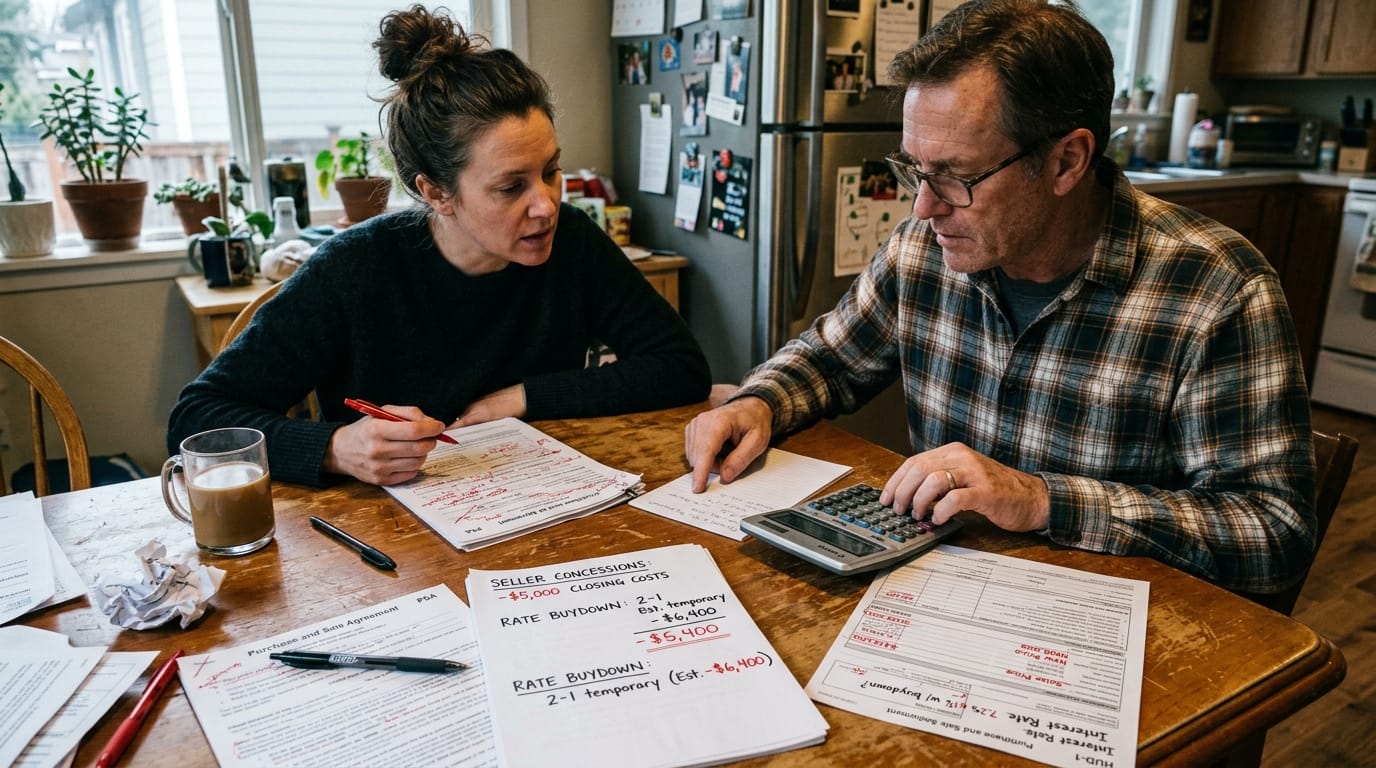
The Math of the 2-1 Buydown One of the most effective tools in a high-rate environment is the 2-1 temporary rate buydown. This mechanic lowers the buyer’s interest rate by 2% in the first year and 1% in the second. For a seller, the cost is the difference in monthly payments for those 24 months. This often costs less than a 5% price reduction but offers the buyer more significant monthly relief during the initial years of homeownership.
The Buyer’s Decision: Cash vs. Payment Buyers must decide where they need the most help. If keeping cash on hand for immediate repairs or moving costs is the priority, asking the seller to cover closing costs is the right move. If long-term affordability is the concern, a rate buydown is more effective. In some cases, concessions can also serve as a buffer for minor appraisal gaps if the lender allows.
Translating the Market Reality At eppraisal, we translate these market behaviors by focusing on objective features. We analyze local infrastructure projects, economic shifts, and localized indicators that drive these transaction trends. By providing this context alongside our AI-Driven Property Estimates, we help you understand the economic drivers behind the data.
Explore how local factors impact your neighborhood at eppraisal.