 By Staff
The Regional Divergence: Navigating the 5% Growth Gap Between "Refuge Markets" and Supply-Rich Metros
In the projected 2026 housing landscape, the traditional "national housing market" narrative has effectively dissolved. For years, homeowners and sellers relied on national averages to gauge the health of their equity. However, recent data forecasts a sharp regional divide. While national home price appreciation has stalled at a modest 0.8% to 1.4% year-over-year, this figure hides a significant split in how properties are actually performing.
We are seeing a 5.4% performance gap between the top-performing "refuge markets" and supply-rich metros. A refuge market is a metropolitan area, primarily in the Northeast and Midwest, that was largely bypassed during the hyper-speculative pandemic boom. These markets now offer the stability and affordability that today’s buyers demand, making them a safe haven, or refuge, for equity in a fluctuating economy.
In these regions, constrained inventory and relative affordability are driving projected price gains as high as 9.5%. Conversely, in the South and West, specifically across Florida and Texas, a surge in inventory and rising carrying costs have pushed price trends into negative territory, averaging a 2.6% decline. For homeowners monitoring equity and sellers planning a move, understanding this divergence is no longer optional. It's the difference between a successful exit and falling into the "relisting trap."
The Rise of the Refuge Market
The strongest growth forecasted for 2026 is concentrated in these steadier regions. Hartford, Connecticut, currently leads the nation with a combined growth rate of 17.1%, driven by a 9.5% increase in median sale prices. Similarly, Milwaukee, Wisconsin, has recorded a 7.0% price gain. These markets share three critical characteristics that homeowners should monitor:
- Structural Undersupply: Unlike the Sunbelt, these regions didn't see a massive wave of new construction over the last five years. Inventory remains historically tight.
- Hybrid Work Infill: Professionals who no longer commute five days a week to high-cost hubs like Manhattan or Chicago are moving to secondary cities. This "infill" demand maintains a floor under property values.
- Lower Entry Points: Even with recent gains, a home in Milwaukee or Hartford remains significantly more affordable than the national average, attracting buyers sidelined by 6% mortgage rates.
In these regions, homeowners can look at their Automated Valuation Models (AVM) with confidence. The "lock-in effect", where owners stay put to keep low-interest rates, continues to restrict supply, ensuring that any available inventory is absorbed quickly.
The Sunbelt Supply Glut
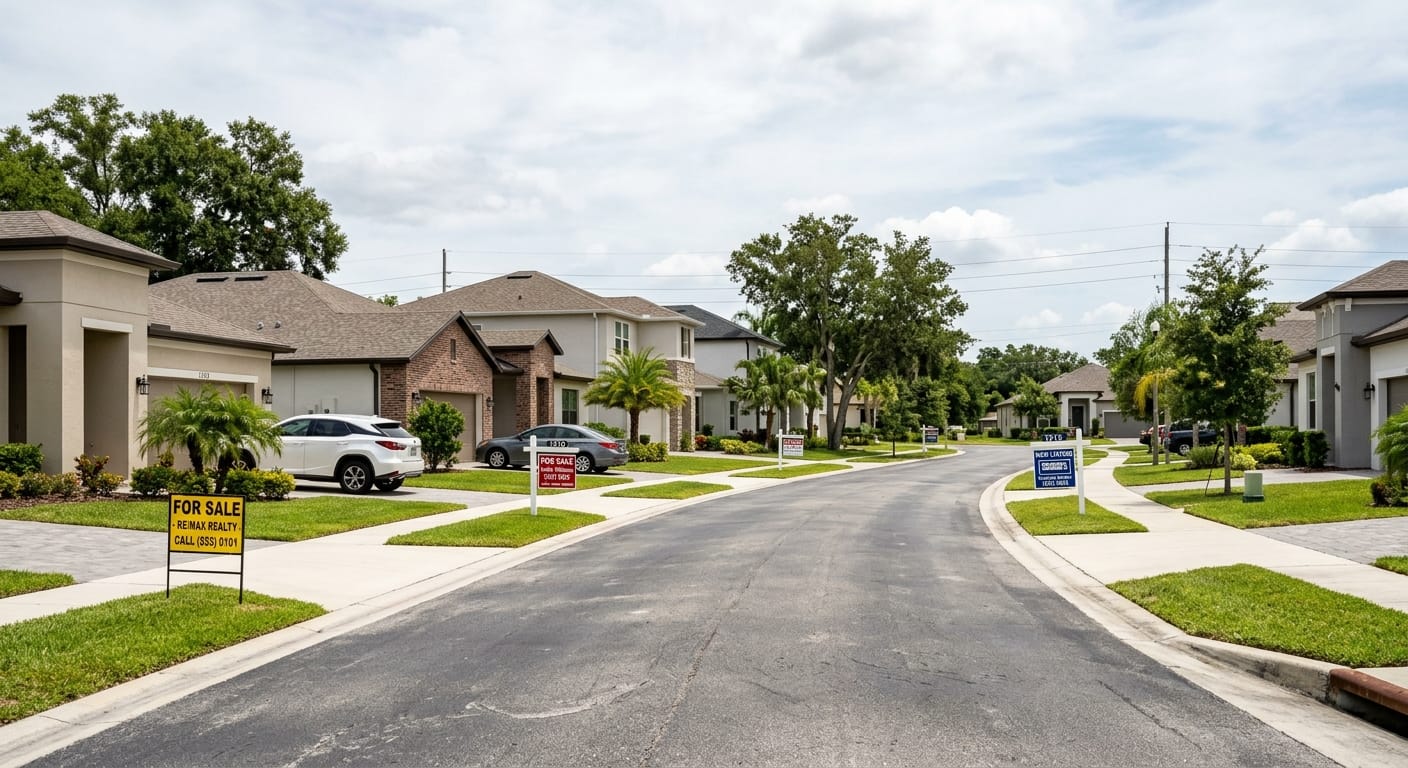
The situation in the South and West represents the opposite end of the spectrum. Florida and Texas now account for 80% of the bottom-performing quartile of U.S. housing markets. Specifically, 11 of the bottom 25 markets are in Florida, and 9 are in Texas.
In these metros, the 2026 spring season is defined by a surplus of choice. Active inventory in states like Florida, Texas, and Colorado now exceeds pre-pandemic 2019 levels. This surge is the result of several converging factors:
- Overbuilding: Pandemic-era boomtowns saw a massive influx of new construction that's now hitting the market simultaneously.
- Rising Carrying Costs: Homeowners in Florida, in particular, are facing a collapse in domestic migration as property insurance premiums and HOA fees soar. In 2025, Florida's domestic inflow dropped from a peak of 311,000 to just 22,500.
- Mean Reversion: Markets that saw the most extreme price hikes in 2021 and 2022 are now seeing the largest corrections as values return to levels supported by local incomes.
For a homeowner in Austin or Tampa, a national report showing "stable prices" is misleading. Local Estimated Property Valuations are reflecting a reality where sellers must compete aggressively for a shrinking pool of qualified buyers.
The Math of Inventory Absorption
To understand why a house in Toledo might sell in three days while a listing in Orlando sits for sixty, you must look at "Inventory Absorption." This is the rate at which available homes are sold in a given month.
As of April 2026, the national absorption rate has slipped to 10.49%. However, this average is a composite of extremes. In Midwest standouts like Chicago and Detroit, absorption rates remain high at 25.9% and 29.5%. In these "tight" markets, the seller holds nearly all the leverage.
In supply-rich metros, the 2.3% year-over-year rise in active inventory has a compounding effect. When absorption drops below 10%, homes spend an average of 66 days on the market, 26 days longer than the top-performing metros. This imbalance forces a shift in strategy. In these regions, 34.4% of all listings now feature price cuts.
Sellers in the South and West must recognize that inventory is the enemy of price. If your local market has five months of supply, pricing your home based on what a similar property sold for six months ago is a recipe for failure.
Equity Monitoring: Reading Your AVM Without the Noise
For the millions of Americans who are not planning to sell this year, the regional divergence creates a different challenge: how to accurately monitor home equity.
If you live in a refuge market, your equity is likely growing despite higher mortgage rates. This provides a buffer for home equity lines of credit (HELOCs) or future moves. However, it's important to remember that these gains are often "paper wealth" until realized. High appreciation in Hartford or Rochester is supported by a lack of alternatives for buyers, not necessarily a surge in local economic output.
If you're in a supply-heavy region, you may see your Automated Valuation Models (AVM) flatten or dip. This is not a signal of a 2008-style crash, but rather a necessary market "thaw." The rapid appreciation of the early 2020s was unsustainable. A 2.6% dip after a 40% gain still leaves most homeowners with significant equity. The key is to avoid making panic-driven financial decisions based on short-term fluctuations.
Pricing Strategy: Avoiding the "Relisting Trap"
For those who must sell in a supply-rich metro, the "relisting trap" is the primary risk. This occurs when a seller overprices a home, watches it sit on the market for 45 days, and then performs a series of small price cuts that fail to keep up with the market's downward momentum.
To avoid this, sellers in Florida and Texas should adopt a "First-Move Advantage" strategy:
- Ignore National Averages: If national news says prices are up 1%, but your local inventory has doubled, focus strictly on the local data.
- Audit the Competition: Look at the number of active listings in your specific ZIP code. If inventory is up more than 10% year-over-year, you are in a buyer-friendly market.
- Price for Absorption: In a 10% absorption environment, you must be the most attractive house in your price bracket to get an offer in the first 21 days.
- Factor in Concessions: 39% of sellers nationally now expect to make concessions, such as rate buydowns or repair credits. In supply-heavy markets, this is often more effective than a simple price cut.
The Local Narrative
The 2026 housing market proves that geography is destiny. The 5.4% growth gap between regions like the Northeast and the Sunbelt has created two entirely different experiences for American homeowners. One market is defined by a desperate search for affordability and a total lack of supply. The other is defined by a surplus of choice, rising insurance costs, and a return to traditional market cycles.
Navigating this divergence requires moving beyond generic data. Whether you're monitoring equity or preparing a listing, your strategy must be grounded in hyper-local facts. Our platform provides direct access to information about specific supply and demand dynamics of your neighborhood, helping you filter out the national noise.
In a split market, the "why" behind the numbers is just as important as the numbers themselves. Ask eppraisal Agent.
Share This Article

Join our newsletter!
Enter your email to receive our latest newsletter.