The Refrigerant Sunset: How EPA Low-GWP Mandates Reshape HVAC Replacement Cost
The Core Takeaway
New federal environmental rules are phasing out the legacy chemical coolant (R-410A) used in most residential air conditioners. While your existing system remains perfectly legal to run, a simple parts breakdown could now trigger a complete $9,000 to $16,000 system replacement. This is because modern, compliant coolants require entirely different safety hardware and cannot be safely mixed with older units. By checking the manufacturing date on your outdoor unit today, you can accurately budget for these upcoming capital expenses rather than facing a surprise five figure emergency replacement during peak summer heat.
The days of the $800 air conditioner repair are officially over. A single failed compressor or punctured coil no longer means a simple afternoon service visit. Instead, updated environmental regulations are turning routine cooling failures into mandatory $9,000 to $16,000 whole system replacements.
For two decades, homeowners treated central cooling as a simple, affordable fix. A technician could swap a single outdoor part and restore cold air for another five years. That low cost maintenance pathway has vanished. Under updated federal environmental rules, the heating and cooling industry is abandoning older chemical coolants. This forces a complete recalibration of household budgets, turning routine maintenance into a massive capital expense.
The central reason for this financial shift comes down to the coolant circulating through your air conditioning lines. For 15 years, nearly every residential system relied on a legacy chemical known as R-410A. Recent federal guidelines restrict manufacturers from producing new residential air conditioners that use it. In their place, manufacturers must build systems running on newer, lower impact chemicals known as A2L coolants. The most common replacements entering the market today are R-454B and R-32.
If your home currently has a functioning R-410A system, it remains completely legal to operate. The practical challenge begins when something in that legacy system breaks and requires replacement parts or fresh chemical recharges. Many property owners assume an older air conditioner can simply be topped off with the newer, compliant coolant. That is mechanically impossible.
These new chemical mixtures operate at vastly different working pressures. They also require completely different lubricating oils inside the compressor. Furthermore, updated building codes classify modern A2L coolants as mildly flammable. Because of this classification, manufacturers must build new equipment with specialized safety features. These include integrated chemical sensors and automatic shut off boards that older units simply do not possess. Putting new coolant into an older unit creates severe mechanical failures and voids all warranties.
This incompatibility permanently eliminates piecemeal equipment repairs. In past years, if the outdoor condenser unit failed, your service contractor could swap out just that exterior box. The new safety requirements permanently end this approach. Modern outdoor equipment must continuously communicate with the indoor air handler to monitor for leaks. A new outdoor unit cannot safely communicate with an older indoor unit. If one half of the system fails today, you must replace both halves simultaneously. What was once an isolated repair is now an unavoidable five-figure equipment overhaul.
Some homeowners choose to nurse aging units along by purchasing annual top-offs whenever a minor leak develops. That strategy has become a severe drain on cash reserves. The federal rules do not just govern newly manufactured machinery. They also enforce an aggressive, step down quota on the production and importation of legacy R-410A supplies. With wholesale availability shrinking each year, the retail price of the older chemical has climbed substantially.
Contractor service bills for recharging older units have jumped by three to five times compared to recent years. A routine recharge of 3 or 4 pounds of coolant used to cost a couple hundred dollars. Today, that exact same service routinely approaches $1,000. Spending that amount simply to push an aging 10 year old compressor through another humid August represents a terrible return on investment. Those repeated service charges quickly consume funds that would be better directed toward purchasing modern, warrantied equipment.
Installing modern equipment also introduces hidden labor considerations that homeowners must account for in their improvement plans. Copper pipes, known as line sets, run hidden between the outdoor condenser and the indoor air handler to move coolant. In past replacements, contractors could often flush existing lines with a cleaning solvent and reuse them. With newer chemicals, differing pipe diameters and stubborn legacy oil residue frequently make reusing existing copper lines impossible. Contractors must physically run brand-new copper lines across the home to satisfy manufacturer specifications.
In houses with open basements or accessible crawl spaces, running new copper lines adds only modest labor charges. The financial calculation changes dramatically in multistory homes or finished living spaces where pipes run hidden behind drywall. Running new copper in these enclosed properties requires cutting exploratory access holes, tearing open walls, patching drywall, and repainting finished rooms. These unexpected cosmetic repairs can easily add thousands of dollars to an installation invoice, escalating a standard swap into a major interior construction project.
Beyond unexpected household repairs, this regulatory sunset directly impacts home equity and real estate transaction negotiations. Heating and cooling hardware has become a primary target during structural property inspections. Buyers and real estate professionals closely inspect exterior data plates to determine equipment age. When prospective buyers spot a 12 year old system running on phased out coolant, they recognize that any future failure requires a catastrophic replacement.
Because partial repairs are off the table, informed buyers use an aging system to demand substantial closing concessions. Homeowners entering negotiations with an obsolete cooling system regularly encounter requests for ten thousand to fifteen thousand dollar price reductions or escrow repair holdbacks. Waiting for a system to break down during an active listing puts the seller in a severely compromised position. Conversely, homeowners who track equipment lifespans can schedule proactive replacements, neutralizing buyer leverage entirely.
Municipal building requirements also play an expanding role in equipment economics. Modern systems require specialized mechanical permits because of the electrical integration mandated by updated residential fire codes. Technicians must hold specific certifications to handle mildly flammable coolants, which raises baseline trade labor rates. Local municipal inspectors now routinely verify that newly installed systems include certified leak mitigation sensors before closing out permits.
Unpermitted mechanical replacements are becoming much harder to overlook during property sales. Title agents frequently scrutinize municipal permit records to ensure major property renovations meet current safety codes. Failing to obtain the proper initial permits can stall closing timelines for weeks until a licensed contractor verifies the installation retroactively. Ensuring proper permitting from day one protects property marketable title and eliminates transaction friction.
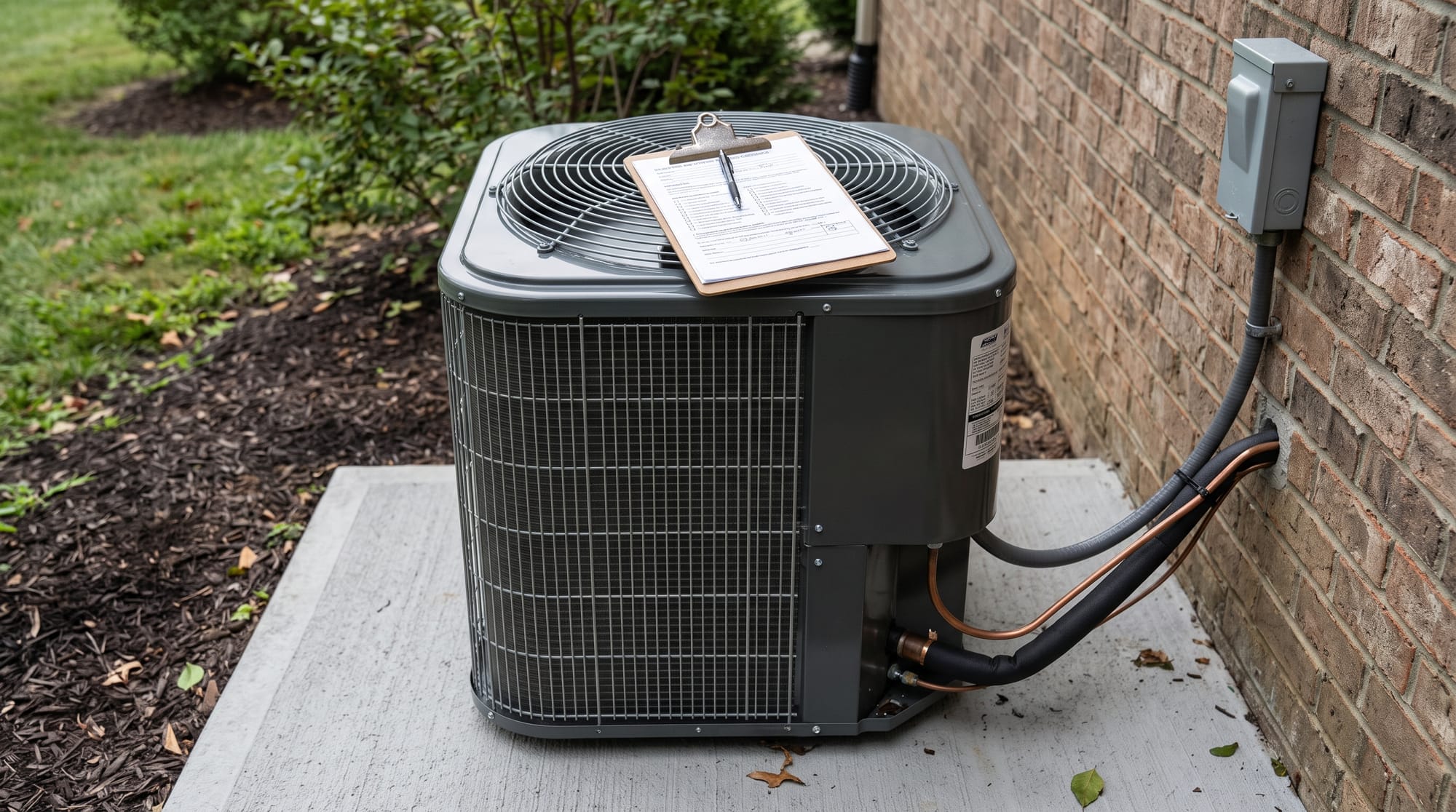
Protecting your home budget starts with knowing the exact age and type of equipment currently cooling your property. You can gather this vital information with a quick visual check of your outdoor unit. Look for the stamped metal data plate listing the build date and designated chemical type. If your unit relies on R-22, it uses a chemical that has already completed its phaseout. If the unit was built between 2012 and 2023, it almost certainly uses R-410A.
When an R-410A unit reaches ten or more years of age, it enters a critical vulnerability window where parts are scarce and coolant recharges are prohibitively expensive. Knowing this specific date allows you to accurately budget capital maintenance reserves with clarity. By understanding the regulatory math governing modern cooling equipment, property owners can prepare methodically, protect their savings from surprise peak-summer breakdowns, and safeguard their financial leverage for the future.
FAQs
Eppraisal analyzes publicly available property and market data to generate Estimated Property Valuations and plain-English qualitative insights. It explains the factors behind a property's estimated value rather than simply returning a number, helping you make informed decisions.
The phaseout of older R-410A coolants forces a transition to new A2L chemicals. These new coolants require specialized safety sensors and different operating pressures, firmly eliminating partial repairs. A single component failure now mandates a complete system overhaul costing $9,000 or more.
No, you cannot put modern A2L coolants into an older air conditioner. The new chemical mixtures require completely different lubricating oils and run at different pressure levels. Modern systems maintain automated safety sensors absent in older units, making the coolants completely incompatible.
The Summary
Active buyers face significant financial liabilities when purchasing homes with unpermitted additions, converted garages, or finished basements. Because county assessors and mortgage lenders strictly exclude unpermitted spaces from official Gross Living Area (GLA) calculations, buyers are exposed to immediate valuation shortfalls and lender escrow holdbacks. Resolving these code