The Transparency Threshold: How Verifiable Upkeep Blocks $5,000 Concession Demands
The Bottom Line
In today's real estate market, elevated buyer caution and rising contract cancellation rates have turned home inspections into secondary price negotiations. Recent transaction data shows that nearly half of all home sales now include some form of seller concession, with buyers of properties fifteen years or older routinely demanding $5,000 to $12,000 in repair credits or price reductions for aging or unverified systems. By preparing and presenting an objective, verifiable home maintenance log, home sellers can shift the post-inspection psychological dynamic from defensive skepticism to empirical facts. Documenting detailed service histories and routine system care serves as a powerful financial shield, dramatically reducing the risk of post-inspection negotiation demands and securing the home's final equity.
The Myth of Cosmetic Preparation: Defining "Move-In Ready"
For decades, traditional listing advice heavily prioritized high-visibility aesthetic preparation. Homeowners preparing to sell were told that fresh coats of neutral paint, professionally styled living rooms, immaculate staging, and manicured landscaping were the primary drivers of a fast, premium sale. While these cosmetic enhancements are undeniably effective at capturing attention, generating digital clicks, and attracting initial offers, they fail to protect the final negotiated sale price once a transaction enters escrow.
In the current real estate landscape, the definition of a "move-in ready" home has fundamentally shifted from superficial aesthetics to infrastructural integrity. Today's buyers are operating under significant financial pressure. Influenced by elevated interest rates and stricter mortgage lending standards, their cash reserves are frequently depleted by higher down payments and rising closing costs. As a result, buyers are intensely protective of their remaining liquid capital. They simply cannot afford to inherit major hidden physical liabilities, such as an aging heating and cooling system, a neglected roof, or outdated electrical components.
This high-risk environment has altered buyer behavior. Over 46% of home sales now include some form of seller concessions, and nearly 40% of sellers report paying out concessions during escrow, a marked increase over previous years. When a property's true mechanical and structural history is undocumented, buyers view that lack of clarity as financial safety exposure. They defensively use the absence of evidence to demand steep financial offsets. While cosmetic upgrades might secure the contract, only structural and mechanical transparency will carry that initial offer unimpeded to the closing table.
The Anatomy of the Post-Inspection Credit Demand
The home inspection is no longer a superficial safety walkthrough; it has become a central financial negotiation. Today's home inspectors are highly incentivized to document every minor fault, structural variance, or mechanical component reaching its statistical age limit. For homes fifteen years or older, even a beautifully maintained property will generate a comprehensive report with dozens of flags and recommendations.
When an inspector notes that a critical system is nearing its typical lifespan and lacks any historical maintenance records, the buyer's immediate response is financial anxiety. Without proof of regular professional service, the buyer must assume the worst-case scenario: that the system has been neglected and is on the verge of sudden, catastrophic failure. Driven by this fear, buyers demand substantial credits to hedge against their projected risk. These defensive concession requests routinely range from $5,000 to $12,000 on mid-aged homes.
To understand why these requests are so financially damaging to sellers, it is useful to compare how buyers calculate risk versus the actual proactive cost of routine maintenance:
Home Component
Typical Defensive Buyer Credit Demand
Actual Proactive Maintenance Cost
Aging Water Heater (10–12 years old)
$1,500 – $2,000
$150 (Annual professional flush & anode check)
Heating & Air Conditioning (HVAC)
$5,000 – $7,500
$200 (Twice-yearly professional system tune-up)
Roof (Mid-aged, unverified history)
$8,000 – $12,000
$0 (Verifiable roof permit & clean inspection)
Electrical Panel & Main Wiring
$3,000 – $5,000
$150 (Routine licensed electrician assessment)
When a seller cannot provide formal evidence of periodic maintenance, the buyer's agent does not negotiate for simple, low-cost repairs. Instead, they demand concessions equal to the complete replacement of the system. In this information vacuum, the seller passively hands the buyer the power to unilaterally adjust the financial terms of the transaction.
The Psychology of the Risk Premium
When a home buyer reviews an inspection report filled with unverified systems, they apply what economists call an "information risk premium." If a buyer suspects that a furnace might fail within eighteen months, they don't offer to split the difference. They demand a credit for the entire cost of a new furnace today because they feel they're taking on all the risk.
This creates an emotional disconnect. As a seller, you know your heating system has run perfectly for years. But to the buyer, your verbal reassurance means very little. In a high-stakes transaction, verbal assertions are dismissed as biased sales talk.
To overcome this skepticism, sellers must cross the "transparency threshold." This threshold represents the point at which your documented custody of the property is so dense, logical, and verified that it overrides the buyer's defensive instincts. When a buyer is presented with a structured, verified home upkeep log, complete with contractor invoices, permit records, and routine service dates, their risk calculation changes. They can no longer reasonably argue that a system is a total liability when there is physical proof of its continuous, professional upkeep.
Creating the Complete Home Upkeep Binder: A Step-by-Step Defense Guide
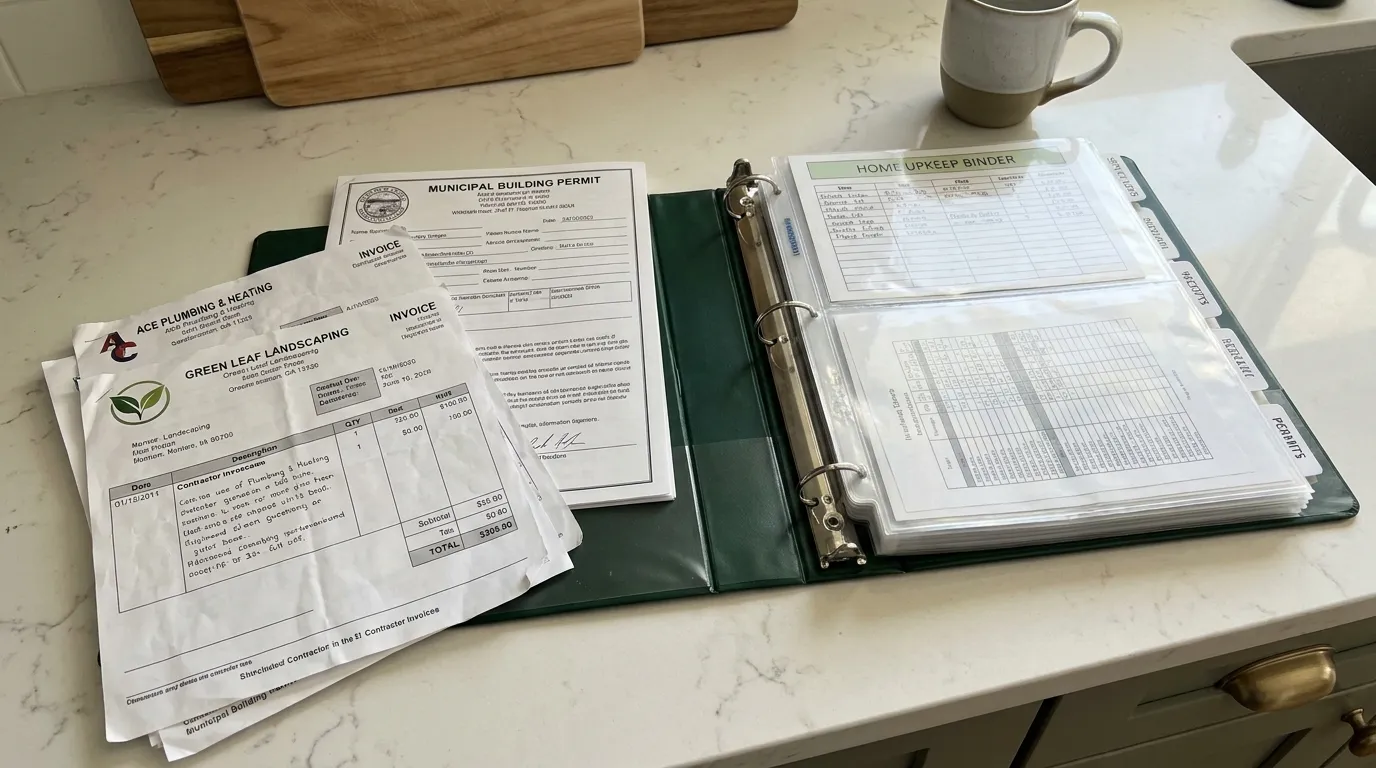
To build a bulletproof preservation of your equity, you should compile a comprehensive physical and digital Home Upkeep Binder before listing your property. This proactively shifts the dynamic from defensive justification to empirical proof.
Systematic Appliance and Mechanical Trackers:
Compile the serial numbers, installation dates, and user manuals for every major system: HVAC, water heater, pool equipment, and major kitchen appliances. Alongside this, place copies of every service invoice, filter replacement log, and maintenance contract.
Structural Record Compilation:
Gather details on the oldest and most critical elements of your home. If your roof was replaced or repaired, include the municipal permits, the roofing contractor's warranty transfer documents, and receipts. If any foundational or structural work was performed, include structural engineering reports and soil compaction test results.
Remodeling and Permit History:
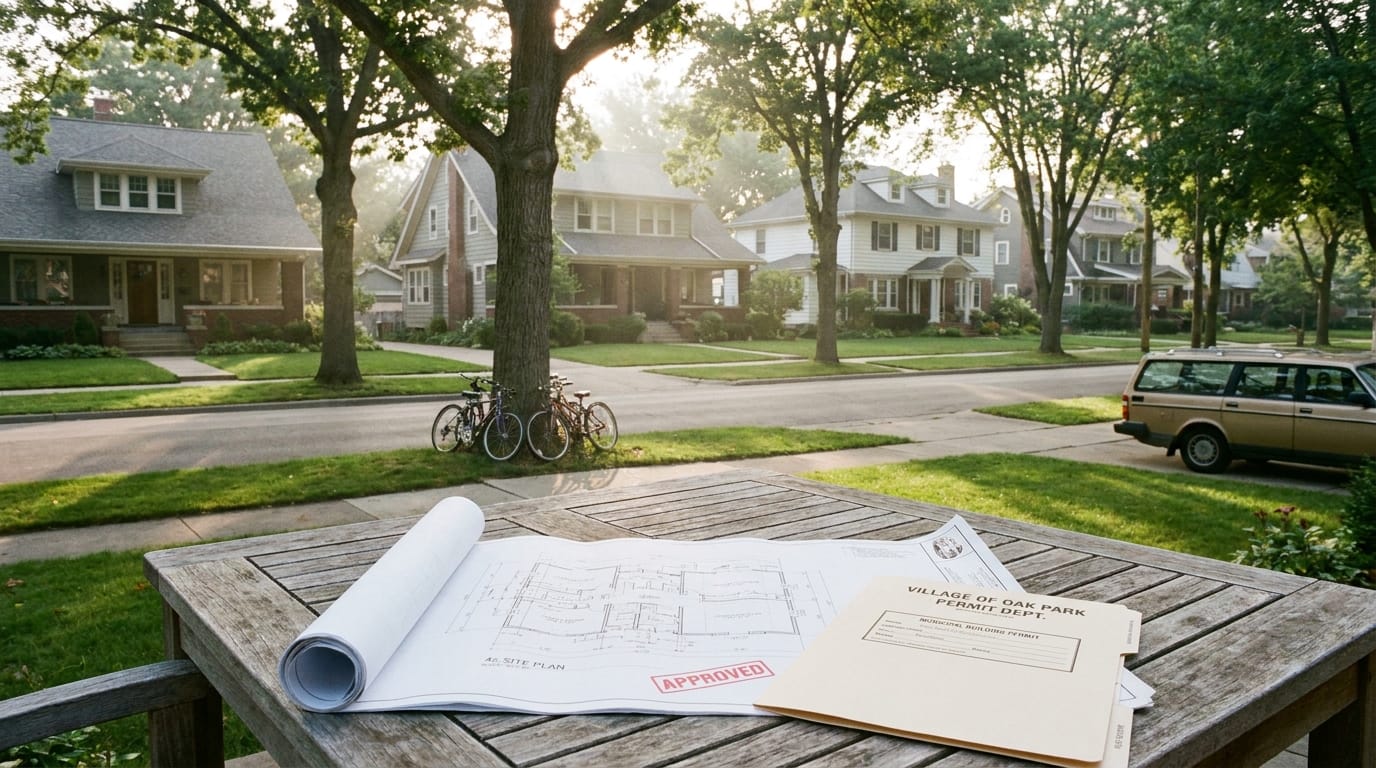
Nothing sinks an escrow faster than a buyer discovering unpermitted work. Include copies of all closed building permits for additions, electrical rewiring, major plumbing overhauls, or deck constructions. This establishes that all improvements were inspected and approved to local code.
Utility and Recurring Services Log:
Include summary statements of your utility bills across the past twelve months. Low, consistent utility bills are strong secondary evidence of high-performing HVAC systems and quality insulation. Furthermore, document consistent servicing like pest control, septic pumping, chimney sweeps, and gutter cleanings.
Transforming Technical Data Into a Selling Asset
Once compiled, this metadata should not be hidden away until the inspection phase. It must be actively integrated into your marketing strategy from day one.
The Staging Presentation: Place your physical Home Upkeep Binder on the kitchen island during open houses and private showings. Label it clearly: "The Preventive Maintenance & Service History of [Your Address]."
The Agent Packet: Ensure your listing agent has a digitized copy of this packet to upload directly to the local Multiple Listing Service (MLS) as an associated document. This signals to buyer agents that the home is managed by a thorough, responsible owner.
The Seller Disclosure Support: Use these clean files to accurately complete your required legal disclosures. This minimizes the risk of post-sale liability and shows transparency from the start.
By taking these steps, you establish a standard of absolute transparency. Instead of reacting defensively to post-inspection demands, you pre-emptively dismantle them. When buyers see a meticulous trail of care, their confidence rises, their perceived risk drops, and your hard-earned equity is preserved intact at the closing table.
FAQs
A verifiable home maintenance log protects your equity by preventing defensive buyer concession demands. Providing physical proof of routine professional upkeep reduces the buyer's perceived risk regarding structural integrity. This transparency effectively blocks aggressive price reduction requests during the home inspection phase.
Sellers can prevent credit demands by compiling a comprehensive upkeep binder that includes service invoices, closed permits, and routine maintenance logs. This documentation proves the mechanical health of aging systems. Buyers are much less likely to demand complete replacement credits when they see verified evidence of proactive care.
The return on investment for documenting maintenance is measured in preserved equity rather than added value. Organizing a few hours of paperwork can easily shield sellers from $5,000 to $10,000 in price reductions. This objective transparency proves structural integrity, making it a highly protective financial strategy.
No. Eppraisal is an AI-powered software platform. It does not list properties, represent buyers or sellers, or facilitate transactions. It provides analytical tools and data context to help you make more informed real estate decisions independently.
The Core Takeaway
While interest rate fluctuations often dominate national news cycles, the stability of the suburban housing market is largely dictated by local administrative timelines. The multi-step process required for zoning, environmental reviews, and infrastructure permits creates a structural lag in new home construction. This steady, regulated pace