The Lateral Trap: How Municipal Point-of-Sale Sewer Ordinances Threaten Seller Net Equity
The Factual Summary
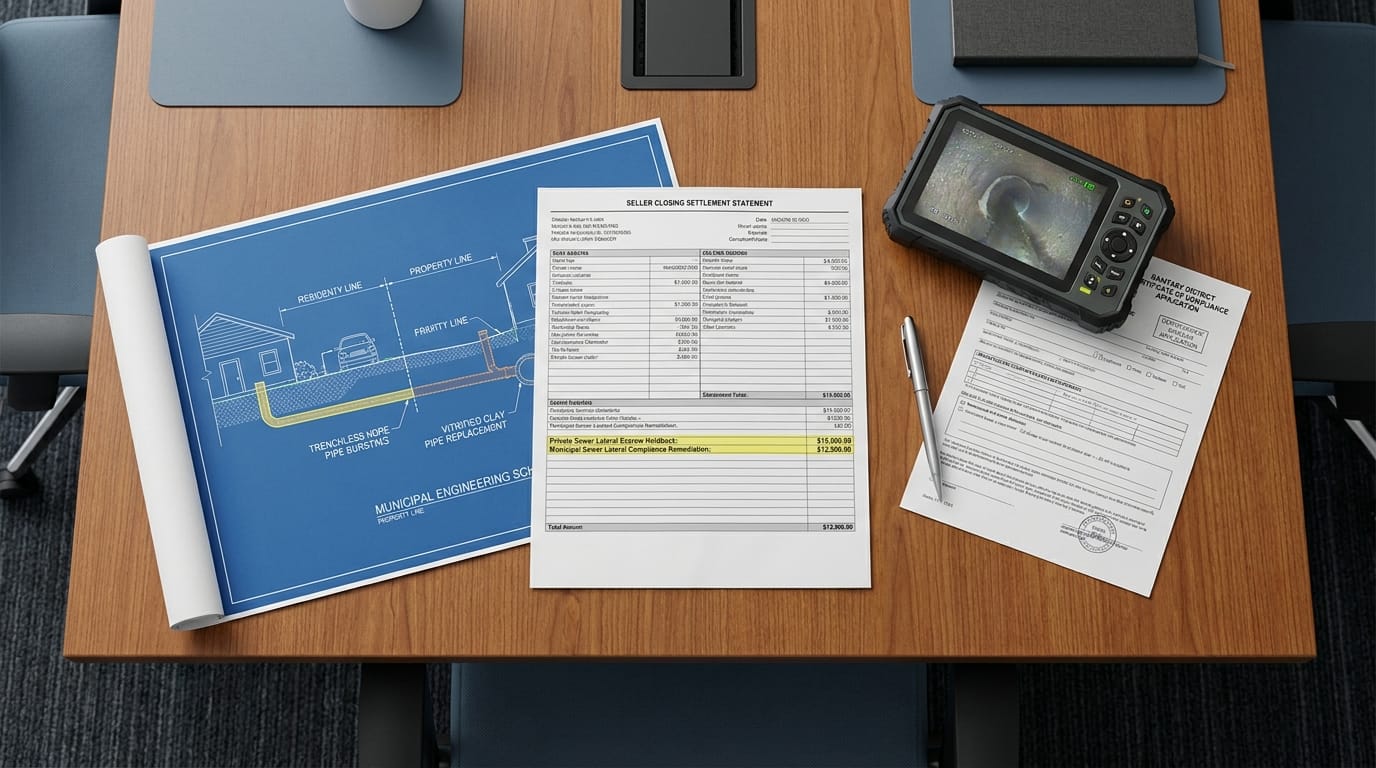
In an increasing number of cities operating under federal clean water agreements, local laws shift major underground infrastructure expenses onto home sellers. These point-of-sale ordinances require sellers to secure an official Private Sewer Lateral Certificate of Compliance before transferring property title. Because older clay, cast-iron, and tar-paper pipes in pre-1980 homes crack and corrode over time, mandatory video inspections frequently reveal underground failures right before closing. Without early testing, home sellers face mandatory escrow holdbacks of $10,000 to $20,000 or emergency repair bills of $7,500 to $18,000, directly cutting into net sale proceeds and risking contractual closing dates.
Why Municipal Sewer Rules Surface at the Closing Table
When you prepare to sell your home, the underground pipe running beneath your front lawn represents a significant financial liability. Across dozens of regional housing markets, local utility districts enforce strict compliance rules that directly affect your net sale proceeds. The underlying cause stems from how cities manage civic wastewater systems during severe weather.
Federal environmental rules mandate that municipal utilities prevent raw sewage overflows into local waterways during heavy rainfall. When older public sewer systems struggle, the primary issue is rainwater leaking into underground networks. Rain saturates the soil and enters public street pipes through broken lines and loose joints. This excess stormwater rapidly overloads the processing capacity of local water treatment facilities.
To avoid federal penalties and protect local waterways, municipal governments operate binding infrastructure compliance programs. However, the public utility only owns the main pipeline located underneath the street. The individual drain line running from your home foundation out to that public main, known as the private sewer lateral, accounts for roughly half of the total pipe network. Because public utilities cannot legally spend municipal tax dollars to repair private property, cities pass local laws requiring homeowners to repair or replace defective lines before selling.
How Point of Sale Sewer Ordinances Operate
Municipalities enforce these plumbing upgrades by linking compliance directly to property sales through point-of-sale ordinances. Under these rules, property title cannot legally transfer to a buyer until the seller provides formal proof of a structurally sound, watertight sewer lateral.
The standard compliance process follows clear steps. You hire a licensed plumbing specialist to run a video camera through your entire lateral line, starting at the house cleanout and moving to the municipal street connection. The plumber records the video and submits the digital file to your local sanitary district for evaluation. If the inspector confirms the lateral meets local standards, the city issues an official Certificate of Compliance, clearing your property for sale.
If the camera reveals cracks, sagging pipes, or broken joints, you must complete full repairs before closing. Regional initiatives such as the East Bay Regional Private Sewer Lateral Program and municipal codes in cities like Morgan Hill enforce these mandates strictly, often applying automatic inspection triggers to any home over 15 to 25 years old. Title companies and escrow officers track these compliance certificates, meaning sellers who skip early preparation often discover the requirement only weeks before their scheduled closing date.
The Real Financial Risk in Older Plumbing Materials
The primary reason sellers encounter sudden replacement requirements is the composition of older plumbing materials. Sewer laterals installed before 1980 were generally constructed from vitrified clay, cast-iron, or compressed tar paper known as Orangeburg piping. Building codes previously allowed these materials because they were readily available and inexpensive, but they deteriorate steadily over decades of use.
Vitrified clay pipes consist of short ceramic segments joined together. Natural soil shifting eventually separates these joints, allowing tree roots to enter the pipe and fracture the clay walls. Cast-iron lines suffer from persistent corrosion along the base of the pipe, where wastewater gradually wears through the metal until the bottom channels collapse entirely. Orangeburg pipes rely on compressed wood pulp sealed with tar, which softens, flattens, and breaks down under wet soil weight.
These older materials carry an average functional lifespan of 40 to 50 years. As a result, original plumbing lines installed in the 1960s, 1970s, or earlier have passed their intended service life. An underground video inspection will clearly reveal the small cracks, offset seams, and root blockages that fail current municipal watertight standards, even if your household sinks and toilets drain without obvious problems.
Calculating the Financial Impact on Net Sale Proceeds
When a private sewer lateral fails inspection, the repair cost falls entirely on your side of the closing settlement sheet. Replacing an underground lateral requires specialized equipment and skilled labor. Modern trenchless installation methods, such as pipe bursting, reduce lawn and driveway damage by pulling a continuous, heavy-duty polyethylene line directly through the old damaged pipe. While this technique avoids tearing up your landscaping, it still requires heavy hydraulic equipment, excavation entry pits, and licensed plumbing crews.
Residential sewer lateral replacements typically cost between $7,500 and $18,000. Total expenses depend on the total length of the pipe, the depth of the municipal sewer connection in the street, and municipal street opening permit fees. Contractors also charge premium rates when sellers request emergency work to save a pending sale.
The greatest financial disruption comes from mandatory escrow holdbacks. Hiring a contractor, completing the physical work, and obtaining final municipal inspection sign-off usually takes two to three weeks. If you discover a damaged lateral midway through a standard 30-day escrow, construction will likely push past your contracted closing date. To keep the purchase agreement alive, mortgage lenders require the escrow company to withhold 1.5 times the contractor repair quote directly from your net sale proceeds. This freezes between $10,000 and $20,000 in a restricted account until the municipality signs off on the completed work. Some sanitary districts also require a refundable cash deposit of $4,500 to grant a temporary time extension.
Delayed closings also weaken your negotiating position. Buyers facing transaction delays may demand price reductions or closing credits to compensate for expiring mortgage rate locks, eroding the net equity you worked to protect.
A Practical Sewer Compliance Checklist for Home Sellers
Protecting your net equity from point-of-sale sewer rules requires early planning before you list your home. By taking practical administrative steps ahead of time, you keep control of your timeline and avoid unnecessary repair premiums.
Begin by checking local regulations. Visit your local public works or sanitary district website to confirm whether your municipality enforces a point-of-sale sewer lateral ordinance or age-based inspection rule. Next, hire an independent plumbing professional to perform a pre-listing video camera inspection. Spending $250 to $400 upfront gives you an objective assessment of your pipe condition before a buyer's inspector controls the narrative.
If the camera reveals pipe damage, starting early gives you enough time to gather multiple competitive quotes from licensed contractors, preventing inflated emergency fees. Finally, completing necessary repairs and securing your Certificate of Compliance before listing allows you to include official documentation directly in your seller disclosure packet. Providing this clearance upfront reassures potential buyers, protects your listing price, and guarantees an efficient closing process.
Model Your Net Equity With the eppraisal Agent
Navigating municipal compliance doesn't have to threaten your transaction. You can take control of your closing timeline early by consulting the eppraisal Agent. Active sellers can run an automated audit of municipal permit records before listing. This early due diligence instantly flags mandatory local point of sale utility ordinances and verifies infrastructure lifespan expectations in your specific city, allowing you to prepare without the pressure of an active buyer contract.
Furthermore, you can pair this data with the eppraisal Agent's Net Yield report. By factoring in possible compliance repairs, such as replacing an aging private sewer lateral, the Net Yield Audit provides localized modeling to calculate your true take home equity. By visualizing how municipal financial thresholds impact your bottom line, you can set a strategic listing price that protects your estimated property valuation, avoids disastrous escrow holdbacks, and secures a smooth closing.
FAQs
Eppraisal analyzes publicly available property and market data to generate Estimated Property Valuations alongside plain-English qualitative insights. It acts as your personal AI assistant, actively explaining the specific infrastructure changes and local market factors behind a property's estimated value rather than simply returning a standard baseline number.
A private sewer lateral ordinance is a local regulation requiring homeowners to repair or replace their underground sewer line before transferring property title. These mandates force active sellers to secure an official Certificate of Compliance, ensuring the pipeline meets strict environmental standards to prevent groundwater infiltration.
Failing a mandatory point-of-sale sewer inspection frequently triggers immediate escrow holdbacks by your mortgage lender. If repairs extend past the scheduled closing timeline, title companies typically freeze funds equal to one and a half times the estimated sewer line replacement cost directly from the seller's net equity.
The Summary
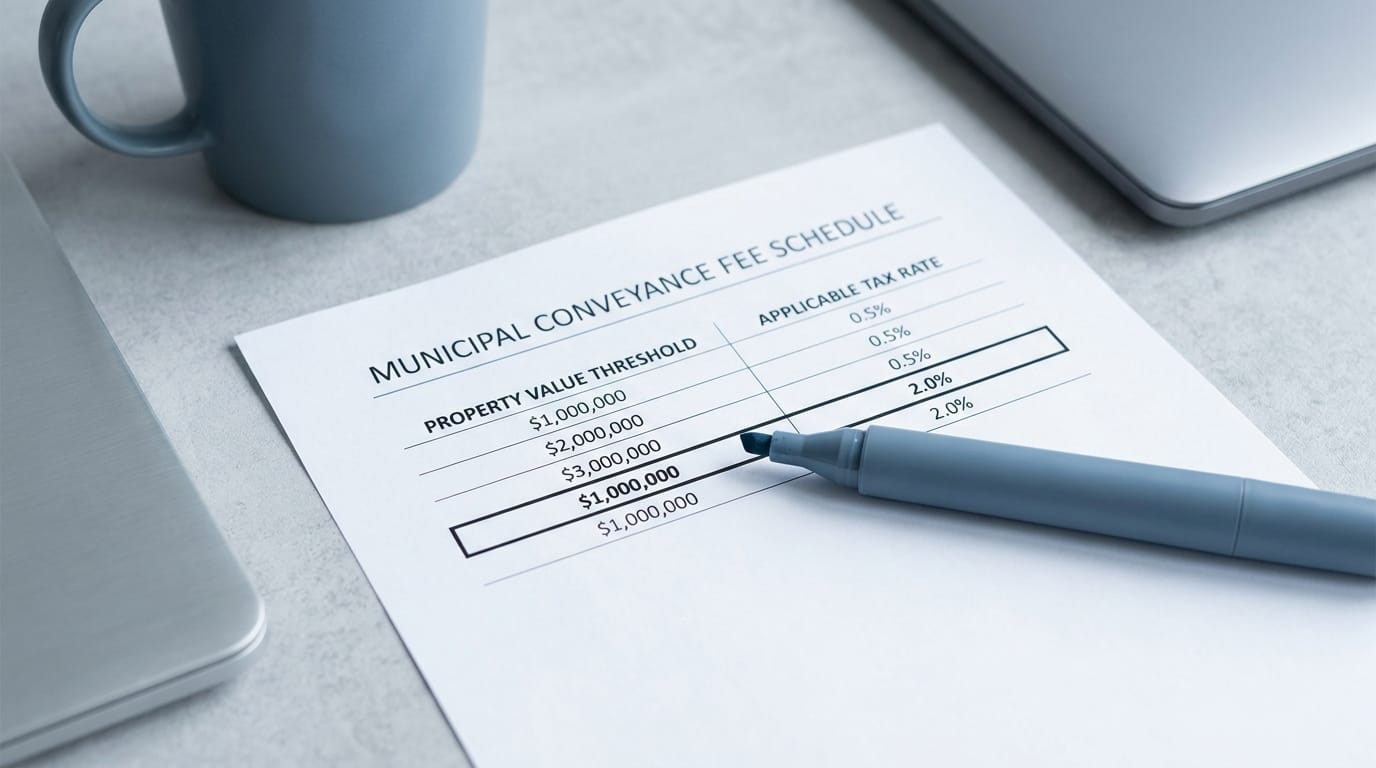
Progressive municipal real estate transfer tax brackets and localized tax cliffs can quickly reduce net seller proceeds. Crossing a statutory transaction threshold by a single dollar often triggers a higher tax rate against the entire gross purchase price.
When you prepare to put your home on the market,
The Summary
Following stricter federal lending guidelines and state-level structural inspection laws, condominium associations are now being forced to fully fund their reserves. This shifting regulatory landscape is triggering massive, unbudgeted special assessments for underfunded buildings. Active buyers must carefully audit an association's reserve study to calculate