The Upzoning Windfall: How "Missing Middle" Legislation is Rewriting Suburban Land Values
To combat a structural 1.9 million home shortfall across the United States, municipalities and state governments have been quietly passing sweeping "missing middle" housing legislation. This regulatory shift, gaining significant momentum between 2024 and 2026, effectively rolls back strict single-family-only zoning, a framework that has defined American suburban development for decades. By allowing for small-scale multi-family structures on traditional lots, local governments are fundamentally altering the underlying value of standard suburban real estate. For homebuyers, homeowners, and sellers, understanding this shift is no longer a matter of abstract urban planning; it's an exercise in objective financial math.
The Mathematics of Land Utility and Yield Capacity
When a standard suburban lot gains the legal capacity to house a duplex, triplex, or an Accessory Dwelling Unit (ADU), the financial baseline of that land changes immediately. A property is no longer strictly valued on the square footage, age, or condition of the existing structure. Instead, it's valued on its maximum legal development potential. This regulatory shift dramatically alters the underlying land value, creating a new financial reality for homeowners who may be sitting on unrecognized equity.
Traditional valuation models heavily rely on historical comparable sales of similar single-family homes within a specific, tight geographic radius. However, these models inherently look backward and often fail to account for recent legislative changes that increase a lot's utility. If a lot can now legally support two or three units instead of one, the financial capacity of that land increases, regardless of whether the current owner intends to build or modify the property themselves. The objective math dictates that land with higher yield capacity commands a higher market price.
Recent market data from early-adopter municipalities illustrates this shift clearly. In areas where zoning was explicitly changed from single-family to multi-unit configurations in 2024 and 2025, lots with verified duplex or triplex zoning commanded a 15% to 28% pricing premium over adjacent lots that remained restricted. This premium reflects the pure value of the legal right to build, entirely separate from the physical condition of the current home.
How Upzoning Changes the Valuation Equation
Analyzing how upzoning affects property values requires looking at the premium that developers and investors place on legal utility. Lots with upzoned capacity carry a distinct financial advantage in the current market. This recalculation is a street-level fact. It centers entirely on the physical and legal trajectory of the land, moving away from subjective neighborhood desirability and focusing squarely on asset capacity.
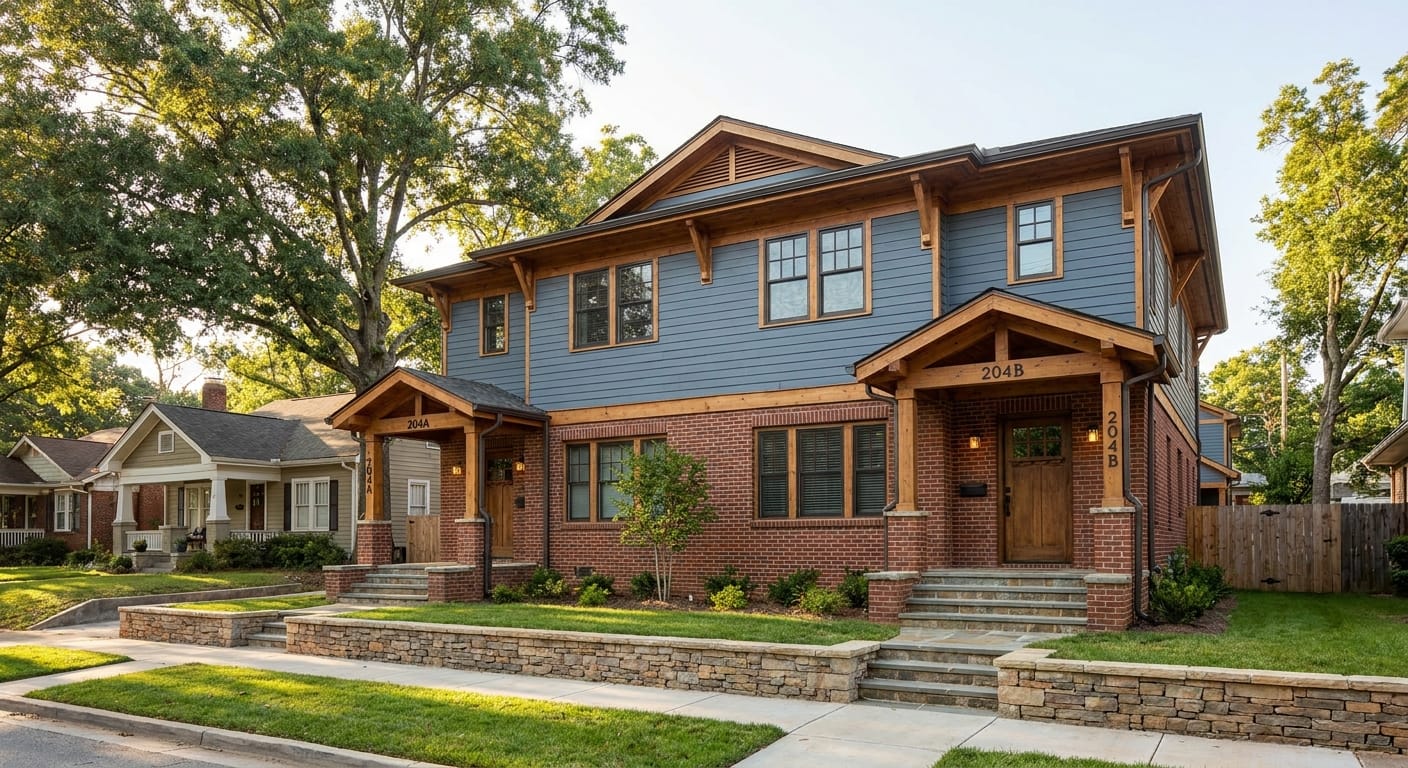
Homeowners often express concern that increased density will alter the character of their street or negatively impact their quality of life. The financial reality is that well-designed, low-rise multi-unit configurations, such as duplexes that match the scale, setback, and aesthetic of existing single-family homes, integrate smoothly into traditional neighborhoods while significantly raising the land's underlying equity. The visual impact on the streetscape is minimal, but the financial impact on the property's balance sheet is substantial and permanent.
The Disconnect in Traditional Comparables
The primary challenge for sellers in an upzoned market is the systemic lag in traditional housing data. When a neighborhood is rezoned for missing middle housing, the immediate comparable sales (often referred to as "comps") usually reflect the old single-family zoning constraints. If a homeowner prices their property based on a neighbor’s sale from six months ago, before the zoning change took effect, they are effectively leaving substantial money on the table.
To capture the true value of the upzoning windfall, sellers must anchor their pricing to the new legal capacity of the lot. This requires a departure from standard comparative market analyses, which often look backward at historical sales rather than forward at the land’s new legal utility. Relying solely on historical data in a market that has just experienced a fundamental regulatory shift is a mathematical error that favors the buyer or developer at the seller's expense.
Selling a Single-Family Home to a Developer
Selling a single-family home to a developer requires pricing this new legal utility into a traditional residential sale. Developers calculate their maximum purchase price based on a strict pro forma: the total allowable units they can build, minus construction costs, carrying costs, and target profit margins. If a homeowner remains unaware of recent zoning changes, they risk pricing their property based on outdated single-family comparables, allowing the developer to easily capture the equity windfall that rightfully belongs to the seller.
Sellers must understand the exact legal capacity of their land to maintain a strong negotiating position and a strong listing advantage. A property marketed with verified duplex or triplex zoning attracts a completely different buyer pool, shifting the transaction from a standard residential sale to an investment acquisition. Applying First-Time Right Pricing in this scenario means anchoring the listing price to the land's maximum allowable yield from day one, clearly communicating the legal utility to prospective buyers and investors.
Navigating the 1997 Capital Gains Exemption Limits
Homeowners sitting on substantial equity must also account for the financial implications of long-term holding, specifically regarding federal tax liabilities. As upzoning increases land values, long-time owners may find their equity gains far exceed the standard capital gains exemptions established by the Taxpayer Relief Act of 1997 ($250,000 for single filers, $500,000 for married couples filing jointly).
Because these thresholds have not been indexed for inflation over the last three decades, the windfall created by missing middle legislation can trigger significant tax liabilities upon sale. Before listing an upzoned property, sellers must calculate their True Net Yield, factoring in these potential capital gains tax liabilities alongside standard closing costs, agent commissions, and potential concession requests. Accurate monitoring allows owners to plan their financial exit strategies with precision and avoid the lock-in effect caused by outdated tax regulations.
Actionable Steps for Homeowners and Buyers
Homeowners must proactively check local zoning laws to understand their exact property classification in 2026. Municipal planning departments are updating zoning maps rapidly to comply with state-level housing mandates, meaning changes often occur without direct, individual notification to property owners. Verifying your lot's current zoning designation is the first required step in accurate equity monitoring.
Additionally, homeowners should seek out qualitative analysis that goes beyond raw data. Understanding the specific nuances of local missing middle legislation, such as setback requirements, parking mandates, and ADU size limits, is crucial for accurately assessing a property's true development potential. A lot may technically be zoned for a duplex, but if local parking mandates cannot be met on the physical footprint, the utility premium cannot be realized.
Applying the eppraisal Agent
The eppraisal Agent translates complex municipal zoning changes into clear, actionable financial insights. By applying this data, sellers ensure they account for newly acquired legal utility that standard valuation models miss.
FAQs
No. Eppraisal is an AI-powered software platform. It does not list properties, represent buyers or sellers, or facilitate transactions. It provides analytical tools and data context to help you make more informed real estate decisions independently.
Upzoning increases the legal utility of your land, allowing for greater development density. This added capacity generally increases your property's baseline value, even if you do not plan to build additional units yourself.
Yes. If upzoning significantly increases your property value, your equity gains upon sale may exceed the static 1997 capital gains exemption limits. This can result in unexpected tax liabilities for long-term homeowners calculating their True Net Yield.
The Factual Summary
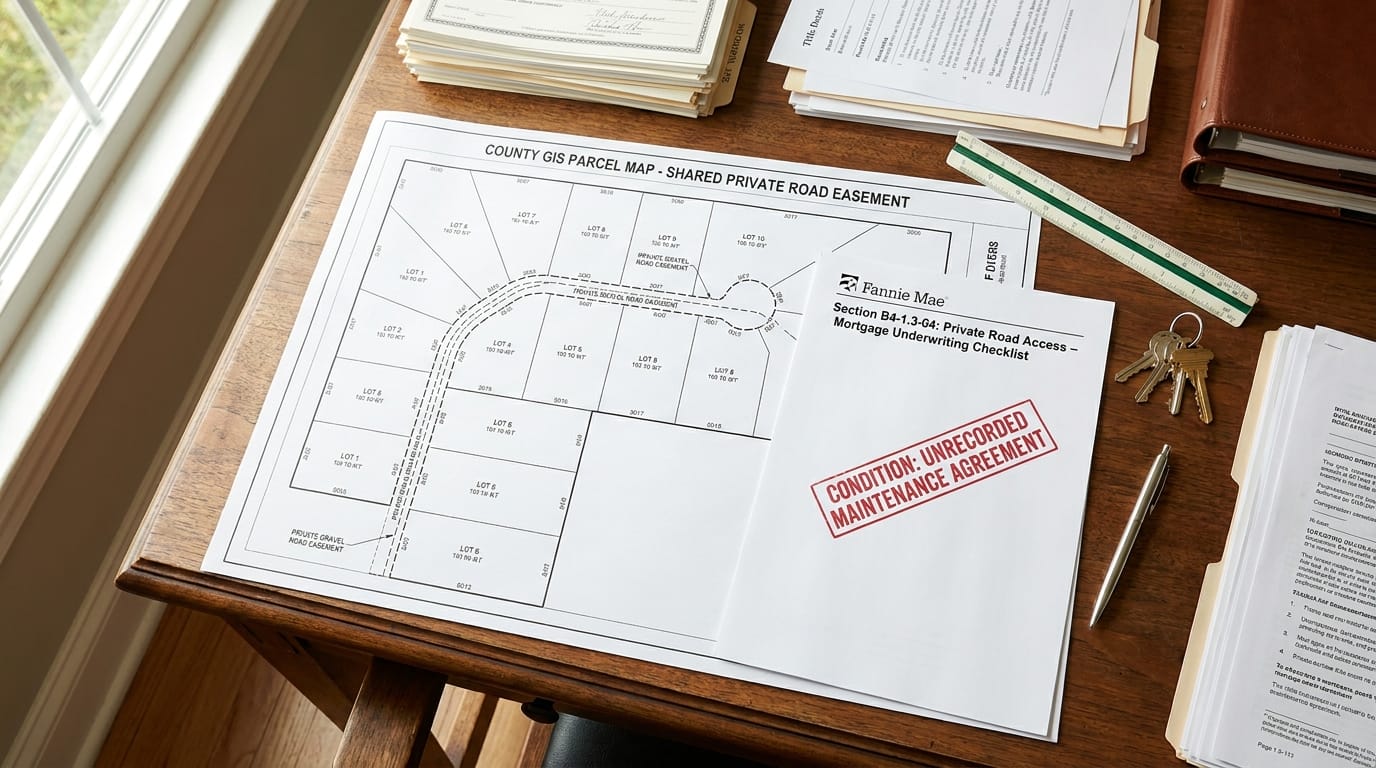
Buying a home on a private road or shared driveway comes with unique legal and financial rules. An informal handshake among neighbors to split snowplowing or gravel costs is not enough to get a conventional mortgage approved. Under Fannie Mae Selling Guide Section B4-1.3-04,
The Factual Summary
Community Facilities Districts (CFDs), Mello-Roos districts, and Local Improvement Districts (LIDs) fund neighborhood infrastructure by adding fixed annual fees to your county property tax bill, typically lasting 20 to 30 years. Because mortgage lenders count these $250 to $650 monthly charges as mandatory debt rather than
The housing market is finding a new balance this April. With national price appreciation stalling at 0.5% and inventory rising nearly 10%, the dynamic is shifting. Sellers face an affordability ceiling as mortgage rates hold near 6%, and buyers are becoming more selective. To keep deals moving, 39% of