The Impervious Surface Squeeze: How Municipal Stormwater Utility Fees Reshape Long-Term Carrying Costs
The Core Takeaway
Many cities no longer pay for local drainage repairs using general property taxes. Instead, they charge property owners a dedicated stormwater utility fee. The city uses aerial maps to measure the exact square footage of hard surfaces on your physical lot, including your roof, driveway, and concrete patios. This measurement creates a fixed monthly carrying cost that will increase based on how much paving you have. Homeowners can lower this expense by checking the city's measurements for accuracy and applying for fee discounts through simple property modifications, like planting rain gardens or connecting rain barrels.
Why Cities Are Moving Away from Property Tax Funding
For decades, local governments maintained roadside ditches, catch basins, and underground storm pipes using general property tax revenues. Under that traditional approach, your tax contribution was determined entirely by the assessed market value of your real estate. A property owner with a high assessment paid more toward city services, while an owner with a modest home paid less, regardless of how much rainwater ran off their respective lots.
Today, municipal drainage systems face mounting financial demands. Aging pipes, stricter clean water regulations, and heavier rainstorms have forced cities to seek dedicated funding for large scale drainage repairs. Instead of raising general property tax rates, many local governments are establishing separate stormwater utilities. This model removes drainage costs from the general tax roll and bills property owners directly, treating rainwater management like water, sewer, or trash collection services.
This shift changes how ownership costs attach to your home. When drainage is billed as a utility fee, property market value is excluded from the calculation. Instead, the city charges you based on how much your physical lot contributes to runoff in the public drainage network. If your property features extensive hard surfaces that prevent water from absorbing into the soil, you receive a higher utility bill. For long-term homeowners, this creates an ongoing carrying cost that operates outside standard property tax caps and mortgage structures.
Understanding the Equivalent Residential Unit
To bill properties fairly across an entire city, municipal engineers use a standardized measurement called the Equivalent Residential Unit, or ERU. To determine the base ERU, the city calculates the average square footage of hard, nonporous ground cover found on a typical single family residential parcel.
While the exact number varies by region, a single ERU typically represents 2,000 to 3,500 square feet of impervious surface. An impervious surface includes any material that prevents water from soaking naturally into the ground, such as:
The roof footprint of your main home and attached garage.
Detached structures, such as storage sheds, workshops, and pool houses.
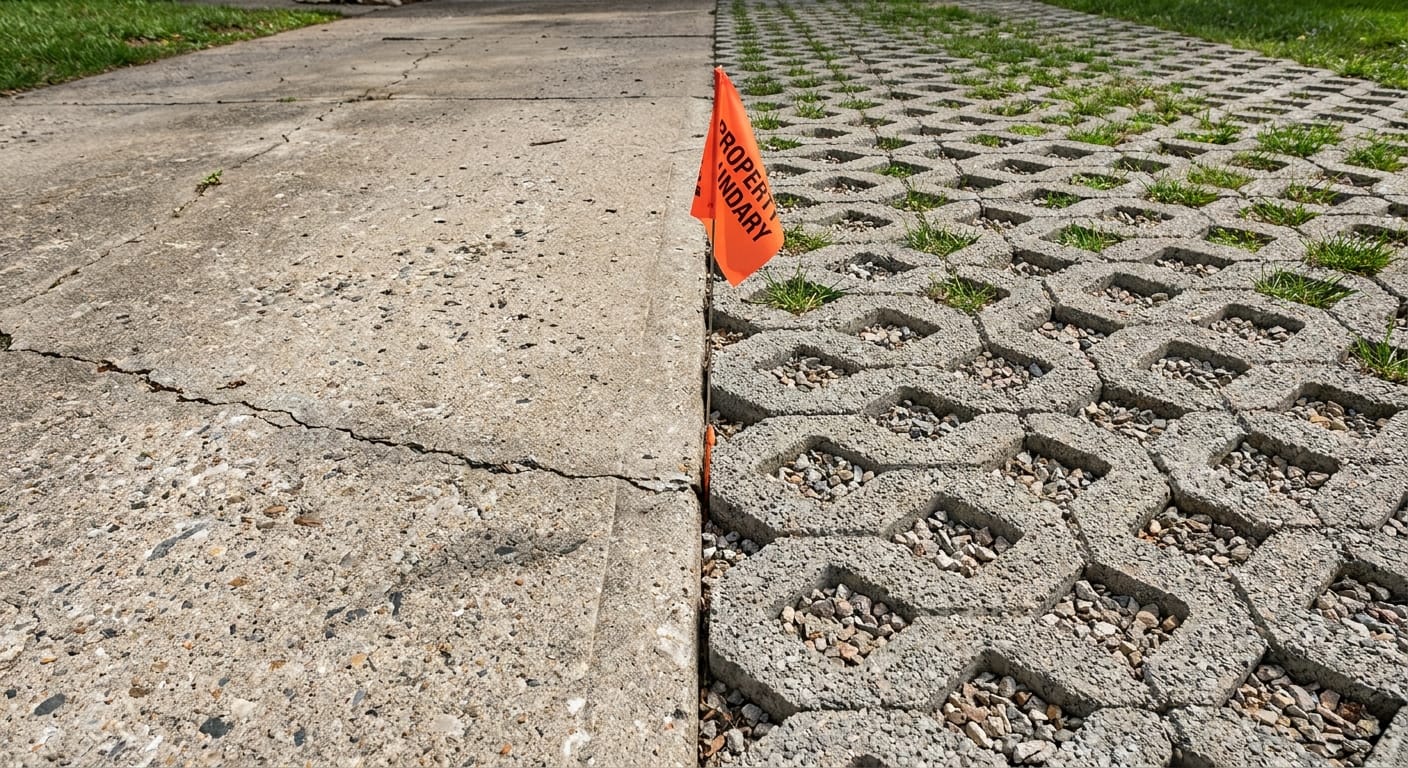
Paved driveways made of concrete, asphalt, or masonry stone.
Concrete patios, paved walkways, and pool decks.
Compacted gravel driveways and parking areas with low soil absorption.
Your property is assigned an ERU tier based on your total hardscape. If a city sets one ERU at 2,500 square feet and your lot contains 2,400 square feet of hard surfaces, you are billed for one ERU. If you expand your driveway or build a detached garage that increases your total hardscape to 5,100 square feet, your property enters a higher tier. Whether a city uses broad residential tiers or bills exact square footage, your fee is determined by physical lot coverage rather than property value.
How Aerial Mapping and GIS Technology Measure Your Lot
Cities determine the exact size of your hard surfaces without visiting your property by using Geographic Information Systems (GIS) paired with high resolution aerial photography and satellite imaging. Municipalities update these aerial surveys every one to three years to track land use across all local parcels.
Specialized mapping software processes these images to separate permeable ground cover, such as lawn and garden beds, from impermeable structures, such as roofs and asphalt. The system traces each paved footprint and calculates your total impervious area down to the square foot, linking that data directly to your county parcel number and utility bill.
This automated monitoring creates ongoing compliance considerations. When you pour a new concrete patio, extend a driveway, or install an outbuilding, the next aerial survey detects the added hardscape. The city automatically updates your parcel record, adjusts your ERU rating, and increases your quarterly bill. Homeowners who assume minor backyard changes remain unrecorded often notice the adjustment on subsequent utility statements.
Measuring the Long Term Financial Impact on Home Equity
While a stormwater fee might appear minor as a monthly charge of $15, $25, or $35, its long term financial impact accumulates over time. Across cities with active stormwater utilities, annual residential charges typically range from $180 to $420 for average single family homes, with larger suburban properties paying $600 or more per year.
Over a ten year holding period, a $300 annual fee represents $3,000 in direct holding costs. These fees don't build home equity or reduce loan balances. In addition, municipal utility charges rarely provide income tax deductions for owner occupants. Stormwater rates also trend upward over time. To fund expanding capital improvement budgets, many city councils implement scheduled rate increases of 3% to 8% annually. A monthly fee that begins at $20 can grow to $35 or more over a decade.
For homeowners who lease their properties, these fees reduce net rental yields unless the lease agreement explicitly assigns municipal utility bills to the tenant. For owner occupants managing monthly household budgets, rising utility fees represent an escalating operational expense that must be tracked alongside insurance and maintenance costs.
Calculating the Return on Investment for Runoff Credits
Because stormwater programs function as public utilities rather than taxes, local governments must offer property owners a way to lower their charges. Most cities publish an official stormwater credit manual listing physical improvements that qualify for annual fee discounts, typically ranging from 10% to 50%.
Homeowners should evaluate these discounts through objective return on investment calculations. For example, replacing a 1,000 square foot asphalt driveway with permeable pavers can cost $12,000 to $16,000. If that project earns a 30% discount that saves $90 per year, the payback period exceeds 130 years, making it an impractical financial defense tactic.
In contrast, low cost modifications often provide practical payback periods:
Rain Barrels: Installing two 55 gallon rain barrels connected to gutter downspouts typically costs $150 to $250 in basic hardware. If your municipality offers a 15% discount on a $300 annual fee ($45 annual savings), the project pays for itself in 4 to 6 years.
Downspout Redirection: Rerouting downspouts away from paved surfaces into garden beds or turf costs under $50 for simple elbow extensions. A 10% annual fee reduction ($30 annual savings) recovers the investment in less than two years.
Rain Gardens: Building a shallow 150 square foot rain garden with basic mulch, native plants, and hand tools costs roughly $350. A 35% discount ($105 annual savings) recovers the capital outlay in under 4 years while managing yard drainage.
Four Practical Steps to Manage Your Stormwater Costs
Homeowners can manage these municipal fees and defend their net property cash flow with four practical steps:
Verify Your Property Measurements: Review your municipal utility bill or your city's online GIS mapping portal. Confirm the impervious square footage assigned to your parcel to ensure your home is not placed in an incorrect ERU tier.
Review the Local Credit Manual: Download your public works department's stormwater fee credit guide to identify eligible improvements, required retention volumes, and filing deadlines.
Calculate Payback Timelines: Divide the total estimated installation cost of any mitigation project by the expected annual fee savings. Prioritize simple projects that break even within three to five years.
Submit Verification Forms: Complete the municipal credit application, including receipts and installation photos. Note any inspection or renewal schedules required to maintain the credit over time.
By understanding how municipal stormwater utility fees work and applying straightforward financial math to available credits, homeowners can prevent billing errors, reduce holding costs, and preserve long term property value.
FAQs
A stormwater utility fee is a dedicated charge based on the exact amount of hard surface on your lot, like a roof or driveway. Unlike a general property tax, it is not tied to your home's estimated real estate value. This physical measurement determines your share of public drainage costs.
Cities use aerial photography and mapping software to measure all the hard, non-porous surfaces on your physical lot. They combine the total square footage of your roof, patios, and paved driveway to assign your home an ERU billing tier. Adding new paved areas will increase your subsequent measurements.
Yes, the majority of local governments offer direct fee reductions if you actively manage rainwater runoff. Homeowners can often earn these financial credits by installing rain barrels, redirecting downspouts, or planting rain gardens. You should calculate the project payback timing using your city's credit manual before starting work.
Eppraisal analyzes publicly available property and market data to generate objective Estimated Property Valuations alongside plain-English qualitative insights. Our software platform explains the complex municipal and physical factors driving a property's estimated value, rather than simply returning a raw valuation number or replacing a certified appraisal.
The Core Takeaway
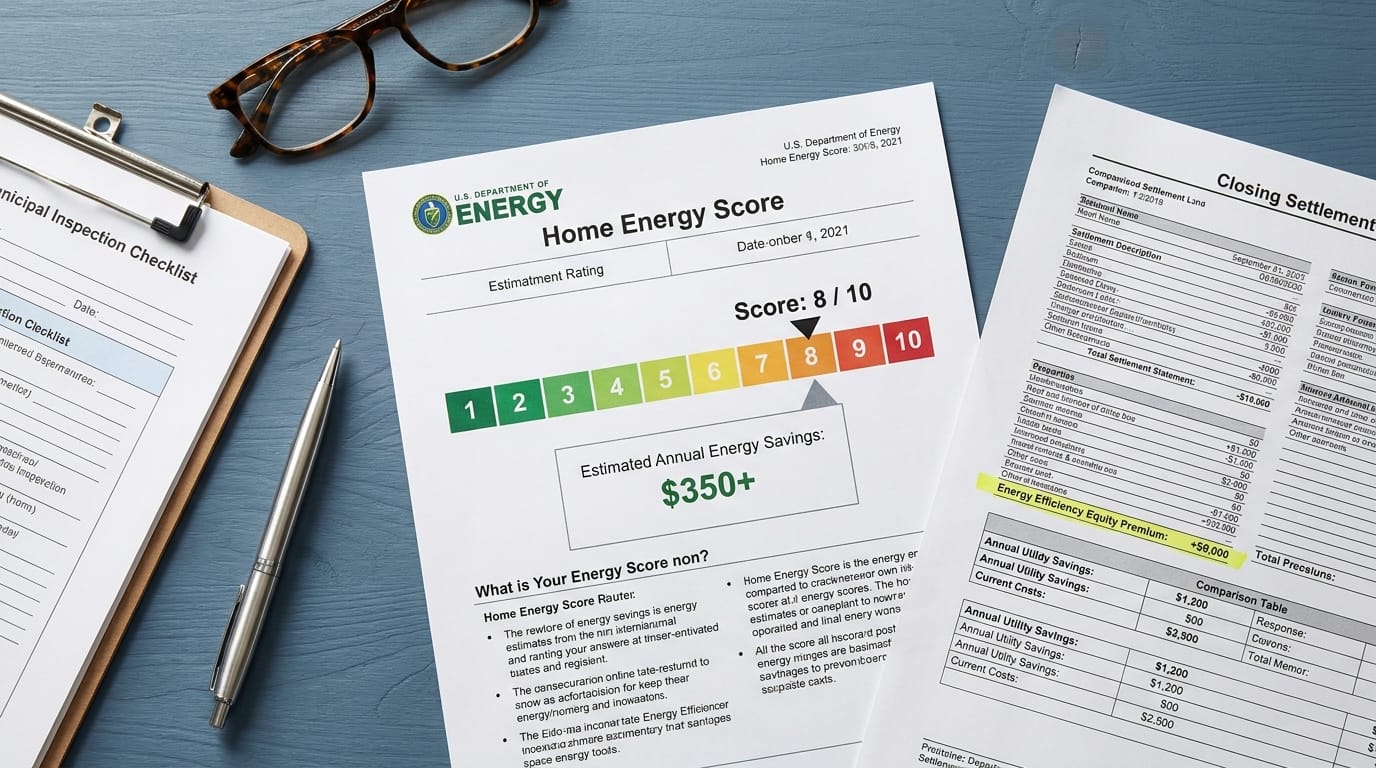
In a growing number of cities, local rules require homeowners to get an official 1 to 10 Home Energy Score before putting a house on the market. Real estate data from Lawrence Berkeley National Laboratory shows that in cities with mandatory scoring, each one-point increase on