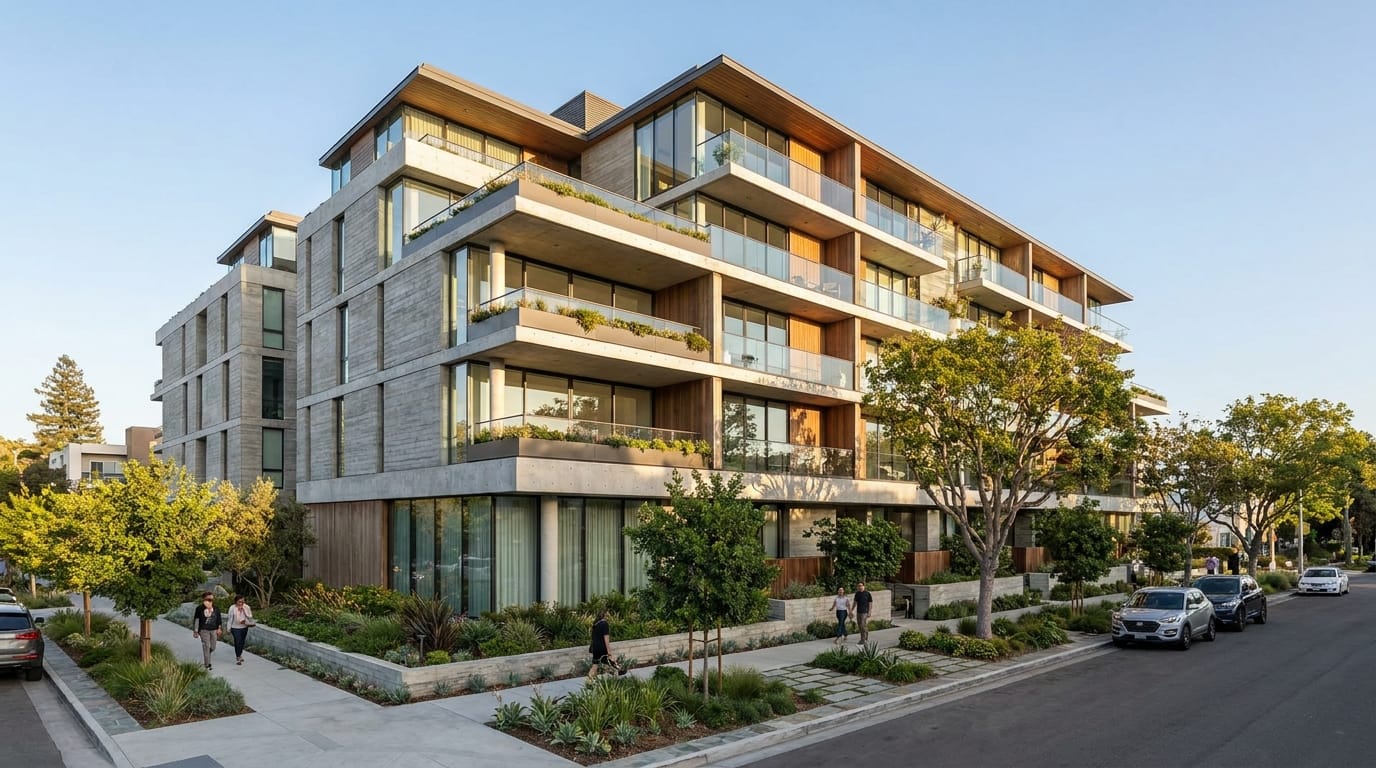
The Assessment Trap: Calculating the True Cost of Condo Living
The Summary
Following stricter federal lending guidelines and state-level structural inspection laws, condominium associations are now being forced to fully fund their reserves. This shifting regulatory landscape is triggering massive, unbudgeted special assessments for underfunded buildings. Active buyers must carefully audit an association's reserve study to calculate the true carrying-cost of the property and avoid hidden financial traps before closing.
For many homebuyers, a condominium represents an appealing entry point into homeownership. It often promises a lower initial purchase price and the convenience of a low-maintenance lifestyle where exterior maintenance, landscaping, and major structural upkeep are handled by a collective entity. However, recent regulatory overhauls in mortgage underwriting and statutory building safety laws have introduced significant financial exposure for unprepared buyers. When evaluating an attached property today, the most critical figure is no longer just the advertised list price or the current monthly dues, it's the financial solvency of the building’s reserve account.
The End of the Artificially Low Monthly Fee
Historically, many condominium boards kept monthly homeowners association (HOA) dues artificially low to maintain buyer appeal and minimize immediate costs for existing owners. Instead of budgeting systematically for the natural depreciation of long-term physical assets, such as roof replacements, elevator modernizations, and exterior siding repairs, associations frequently operated on a pay-as-you-go model. When critical infrastructure failed, the board would simply levy a "special assessment", a mandatory, lump-sum bill charged to every individual unit owner to fund the emergency deficit.
This approach is no longer feasible under current lending rules and safety statutes. Mortgage entities and state regulators now require condominium communities to demonstrate ongoing physical maintenance and immediate cash reserves. For prospective buyers, buying into an underfunded development is no longer just an aesthetic concern, it represents direct personal liability for decades of deferred maintenance.
The Regulatory Shift: Why Lenders Audit the Entire Building
If you plan to finance a condominium purchase with a conventional mortgage, underwriting requirements extend far beyond your personal credit score and debt-to-income ratio. Mortgage lenders now conduct an exhaustive financial and structural audit of the underlying condominium development.
Federal housing finance enterprises, including Fannie Mae and Freddie Mac, have retired the traditional "Limited Review" process for established communities. Under current standards, conventional purchase loans require a comprehensive "Full Review." Lenders must inspect an association’s verified bank balances, pending capital liabilities, and the remaining useful life of shared mechanical and structural components before issuing loan approval.
Starting with loan applications submitted on or after January 4, 2027, Fannie Mae will mandate that associations allocate a minimum of 15% of their annual operating budget directly into replacement reserves, an increase from the historical 10% benchmark. The only exception applies when a recent, professionally prepared reserve study mathematically confirms that adequate reserve funding can be maintained at a lower contribution rate.
Buildings with depleted reserves or deficient master insurance policies face a "non-warrantable" classification. This designation legally prevents conventional lenders from purchasing or backing mortgages within the property. As a result, the pool of eligible buyers shrinks almost exclusively to cash purchasers or specialized portfolio lenders charging significantly higher interest rates. This financing barrier directly depresses property values across the entire building, impacting both immediate equity and long-term resale potential.
State-Level Legislation and Structural Integrity
State-level legislation has introduced aggressive additional requirements. In several heavy-inventory jurisdictions, statutory mandates now require Structural Integrity Reserve Studies for all residential buildings over a certain height or age. These statutes legally prevent unit owners from voting to waive or reduce reserve funding for essential components such as roofs, load-bearing walls, building envelopes, plumbing systems, and common electrical infrastructure.
Associations with heavily depleted reserve accounts must rapidly increase their monthly dues or levy immediate special assessments to bring their funding into legal compliance. This regulatory pressure forces years of deferred maintenance payments onto the personal balance sheets of current owners, severely catching off-guard those who purchased units based solely on the advertised monthly fee.
Decoding the Reserve Study
During the purchase due diligence period, the association disclosure package will include a formal Reserve Study. This document provides an independent engineering and financial forecast of the physical assets, projecting capital replacement costs over a 30-year timeframe.
The central metric within this report is the Percent Funded calculation, which measures the cash currently held in the reserve bank account against the accrued physical depreciation of the shared components.
Reserve Metric
Funding Percentage
Risk Profile & Buyer Implication
0% to 29%
Critical Deficit
High risk of five-figure special assessments and loan rejection
30% to 69%
Moderate / Fair
Caution required; modest fee hikes or targeted assessments likely
70% to 100%
Fully Funded
Stable carrying costs; low risk of unexpected capital calls
A funding level below 30 percent indicates the association possesses a severe funding shortfall. There is a high mathematical certainty of mandatory, five-figure special assessments and a substantial risk of mortgage loan denial. Funding levels between 30 and 69 percent indicate the reserve balance is partially funded. Buyers should anticipate gradual increases in regular monthly dues or targeted assessments as major components near the end of their useful service lives. A fund operating between 70 and 100 percent suggests the association maintains adequate cash reserves to meet projected capital expenditures. Carrying costs are historically stable, and the likelihood of surprise special assessments is low.
When reviewing the reserve study, verify that it was conducted or updated within the last two to three years. Older studies often rely on outdated labor and material rates that do not reflect recent construction cost increases. Additionally, inspect the 30-year funding schedule to confirm whether the board plans gradual dues adjustments or relies on large future special assessments to balance its accounts.
True Carrying Cost Comparison: A Mathematical Case Study
Evaluating an artificially low monthly HOA fee against a higher fee in a financially sound building illustrates the true long-term financial difference between the two scenarios.
Consider two comparable units listed at $320,000, each purchased with a 20% down payment ($64,000) and a 30-year fixed-rate mortgage at 6.5%. When you add $350 per month for combined property taxes and hazard insurance, the baseline operational cost is $1,968 per month for both scenarios.
Financial Factor
Building A (Well-Funded)
Building B (Underfunded)
Listed Base Price
$320,000
$320,000
Stated Monthly HOA Dues
$550/month
$325/month
Reserve Fund Health
82% Funded
18% Funded
Impending Assessment per Unit
$0
$48,000
Assessment Payment Structure
N/A
$800/mo (5 Years)
Adjusted True Monthly Cost
$2,518/month
$3,093/month
Building A is well-funded. It lists an advertised monthly fee of $550 per month. The reserve fund status sits at a healthy 82 percent funded. There are no upcoming special assessments expected because the board has accurately matched dues to physical depreciation. The actual true monthly carrying cost for this unit equals $2,518 per month.
Building B is severely underfunded. It advertises lower monthly dues of $325 per month, creating the false mathematical appearance of greater affordability. However, because its reserve account is only 18 percent funded, the association is legally forced to issue a mandatory $48,000 special assessment per unit to pay for scheduled roof tear-offs and elevator replacements that municipal building codes demand. When this specific assessment is amortized over a standard five-year repayment plan, it adds a direct $800 per month to the owner's expenses.
The total monthly carrying cost in Building B reaches $3,093 per month. This makes Building B $575 per month more expensive to operate than Building A. In addition to higher total monthly cash outflow, Building B carries lending warrantability risks that could severely limit buyer financing options when it is time for resale.
Pre-Offer Due Diligence Checklist
Active buyers can mitigate financial risk before removing contractual contingencies by conducting a structured review of the association’s documentation:
Request the Complete Financial Package: Obtain the current annual operating budget, year-to-date balance sheets, reserve bank statements, and dues delinquency reports. A high delinquency rate indicates that paying owners may eventually absorb operating shortfalls from non-paying members.
Examine 24 Months of Board Meeting Minutes: Reviewing past meeting minutes provides insight into unresolved physical defects, contractor bids, structural leaks, and discussions regarding upcoming assessments before they are formally brought to a vote.
Inspect the Master Insurance Policy: Check the association’s property coverage limits and per-occurrence deductibles. Abnormally high deductibles for water damage or severe weather can result in individual assessments if the reserve fund cannot cover the policy deductible after a loss.
Contractual Contingencies: Include contract clauses requiring the seller to disclose and fully settle all approved, pending, or proposed special assessments prior to closing, or negotiate an equivalent closing credit to offset the liability.
FAQs
eppraisal analyzes publicly available property and market data to generate Estimated Property Valuations and plain-English qualitative insights. We explain the 'why' behind property values, functioning beyond the limitations of standard, backward-looking Automated Valuation Models (AVM).
Mortgage lenders now strictly require condominium communities to allocate a minimum of 15 percent of their annual operating budget directly toward replacement reserves. If a property is severely underfunded, it becomes non-warrantable, which restricts standard financing and forces active buyers to seek out portfolio loans or cash combinations.
When evaluating physical assets, the most important metric is the "percent funded" calculation, which compares current bank cash balances against accrued physical depreciation. A funding level below 30 percent signals a severe critical deficit and a high absolute mathematical probability of mandatory, five-figure special assessments for buyers.
The Core Takeaway
If you sell a home in a state that bills property taxes in arrears, you must credit the buyer at closing for the days you lived in the home during the unbilled tax period. Because the final county tax bill is unknown at settlement, standard real estate
The Factual Summary
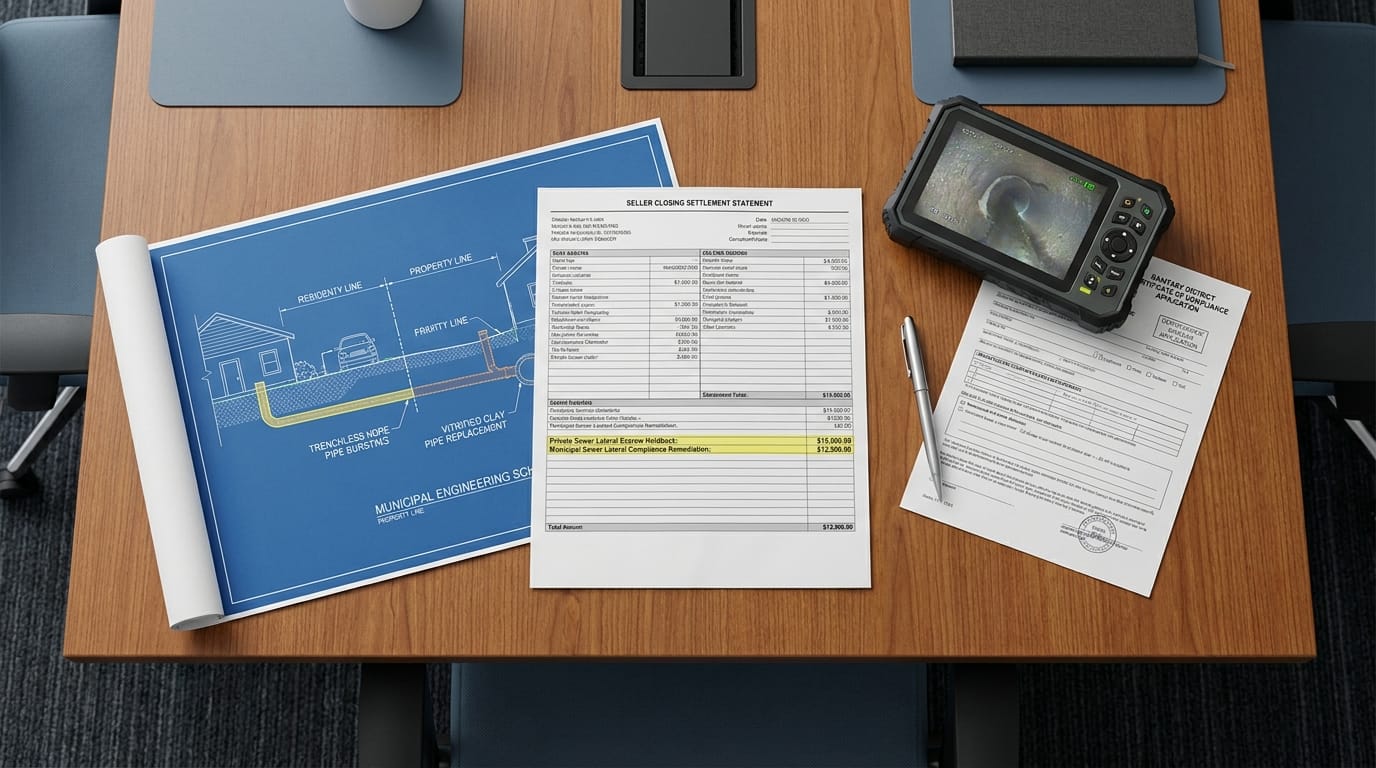
In an increasing number of cities operating under federal clean water agreements, local laws shift major underground infrastructure expenses onto home sellers. These point-of-sale ordinances require sellers to secure an official Private Sewer Lateral Certificate of Compliance before transferring property title. Because older clay, cast-
The Summary
Progressive municipal real estate transfer tax brackets and localized tax cliffs can quickly reduce net seller proceeds. Crossing a statutory transaction threshold by a single dollar often triggers a higher tax rate against the entire gross purchase price.
When you prepare to put your home on the market,