 By Staff
The Leak Detection Defense: How a $900 Smart Valve Protects Your Insurance Premium
The Core Takeaway
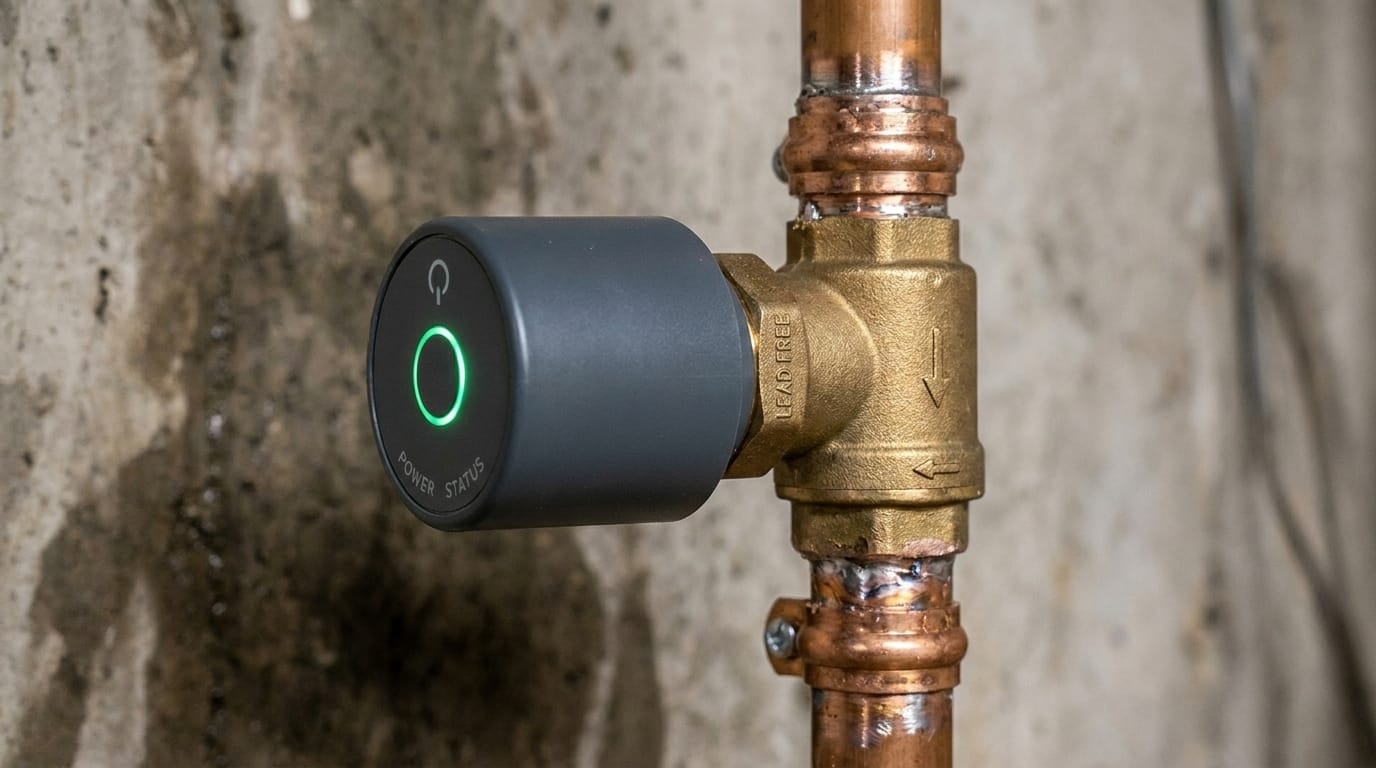
Water damage from sudden indoor plumbing leaks is a leading cause for high homeowners insurance claims, which can directly cause your monthly escrow payments to spike. To protect your monthly budget and prevent your insurance company from dropping your coverage completely, you can install a smart water shutoff valve on your main water line. This physical upgrade monitors your home's water pressure and automatically shuts off the municipal supply if a pipe bursts. Installing a whole home valve typically costs around $900, but major insurance companies actively reward the upgrade with a 5% to 15% discount on your premium each year. This discount helps the system pay for itself over time while keeping your property's carrying costs low and your equity secure.
The Hard Ledger: Installation Costs, Carrier Credits, and Payback Timeline
Deciding whether to install a smart water valve really comes down to simple math and long term peace of mind. A premium whole home smart shutoff valve retails between $400 and $500. Installing the unit requires a licensed plumber to cut a section of the main supply line, solder or crimp transition fittings, mount the valve, and connect the unit to power. Turnkey installation labor typically runs between $400 and $600 for clean, accessible runs, bringing the total upfront investment to roughly $900.
Major property insurers, including State Farm, USAA, Amica, Travelers, Nationwide, Mercury, and Chubb, actively subsidize these installations. Carriers offer verified policy discounts ranging from 5% to 15% on the hazard portion of a homeowners policy. On a typical $2,400 annual premium, an 8% policy credit yields $192 in annual cash savings. That credit fully amortizes the average $900 turnkey installation in just 4.7 years, generating more than $1,020 in net cash savings over a ten year holding period.
The direct premium discount is only the baseline return. Physical shutoff valves also insulate household finances from separate $5,000 to $10,000 water damage deductibles, prevent five year CLUE, Comprehensive Loss Underwriting Exchange, claim surcharges that can add $400 to $700 annually, and satisfy strict carrier underwriting mandates that keep properties out of high cost surplus lines and state backed fair plans.
The Financial Weight of Residential Water Claims
Property insurance is quietly eroding home values by driving up fixed monthly carrying costs. Industry data from the Insurance Information Institute confirms that water damage and pipe freezing account for roughly 23% of all property damage claims filed by homeowners. Every year, approximately one out of every 50 to 60 insured homes files a property damage claim resulting from an interior water leak, with average payouts landing between $12,500 and $15,400. In terms of frequency, plumbing failures trail only wind and hail, making interior leaks the leading nonweather property threat nationwide.
The financial severity of indoor water damage comes down to sheer volume and pressure. Standard municipal water supply lines operate under 40 to 70 pounds per square inch of pressure. When an unmonitored supply line ruptures, an appliance hose splits, or a water heater tank cracks, the plumbing system discharges 8 to 12 gallons of water per minute. If a failure occurs while occupants are away, thousands of gallons flood living areas within hours.
Pressurized water migrates rapidly across subfloors, finished baseboards, and interior drywall. Standing moisture prompts active mold growth within 24 to 48 hours, transforming a routine pipe repair into an extensive structural remediation project requiring industrial dehumidification and floor replacement. Because these plumbing failures cost carriers billions each year, insurers pass the bill straight to homeowners through steeper premiums and dropped coverage.
Escrow Inflation and Household Budgets
Insurance expenses directly alter property values through lender escrow accounts. The vast majority of mortgaged homeowners pay property taxes and hazard insurance through an escrow account managed by their loan servicer. When an insurance company raises an annual premium by $1,200 to $1,800, the mortgage servicer immediately adjusts the monthly escrow withholding upward by $100 to $150 to replenish account reserves.
This monthly adjustment changes real world purchasing math. Housing economists find that for every 10% increase in annual property insurance premiums, home sale prices experience downward pressure of roughly 4.6%. When insurance premiums spike, buyers qualify for smaller loan amounts, forcing them to reduce their offer price.
Even modest premium hikes can quickly drain a household budget. By securing ongoing carrier discounts, these devices protect your bottom line from unnecessary rate hikes. If two comparable properties sit on the same street, a buyer facing a higher fixed escrow burden on one home will logically lower their offer price to offset the ongoing expense. For homeowners planning to hold a property long term, unchecked insurance hikes eat into disposable income and reduce future financial flexibility.
Underwriting Defense: Nonrenewals and Separate Deductibles
Beyond raising baseline rates, insurance carriers are rewriting policy terms to minimize plumbing exposure. Water damage claims carry an industry denial rate near 10%, the highest of any major property claim category. Adjusters strictly distinguish between sudden, accidental pipe bursts and gradual leaks caused by ongoing wear and tear. When a slow leak inside a wall cavity rots subflooring over several months, carriers routinely deny the claim under standard policy exclusions for deferred maintenance.
Even when an insurer approves and pays a claim, the long term consequences can be severe. Submitting a single water damage claim often triggers a 20% to 30% policy surcharge that remains on the property's CLUE record for five years. That surcharge adds hundreds of dollars in unnecessary carrying costs each year. In tightening markets, filing a single water claim can result in an outright nonrenewal notice at the next policy expiration.
To manage exposure while retaining policies, insurers in 2026 are increasingly introducing separate water damage deductibles. Rather than applying a standard $1,000 all peril deductible, carriers write endorsements requiring a dedicated $5,000 to $10,000 out of pocket deductible for any interior plumbing failure. A homeowner dealing with an $11,000 bathroom supply line leak may be forced to pay the first $5,000 out of pocket before receiving insurance compensation.
In severe cases, carriers simply decline to renew coverage on properties that lack active water management. Homeowners facing sudden nonrenewal are forced into high cost surplus lines or state backed fair plans, where annual premiums can double or triple. Installing physical loss prevention systems defends the home against these administrative penalties.
Hardware Teardown: Point Sensors vs. Flow Based Smart Valves
Homeowners have two main hardware options to address interior water risk: localized point sensors and whole home flow based shutoff valves.
Point sensors consist of small, battery operated discs placed on the floor near vulnerable fixtures, such as water heaters, washing machines, and under sink drains. When water pools on the floor and bridges two metal contacts on the base of the device, the unit sounds an audible alarm and transmits a push alert to a mobile app.
While point sensors are inexpensive and simple to install, they have a critical operational limitation: they rely entirely on human intervention. A sensor can sound an alarm, but it cannot stop the flow of water. If a pipe ruptures while the home is empty, water continues flooding the property until an occupant returns or someone physically turns off the municipal curb stop.
Whole home flow based shutoff valves provide active protection. Systems such as Flo by Moen, Phyn Plus, and FloLogic are plumbed directly into the main domestic water supply line where water enters the home. These devices incorporate ultrasonic sensors, mechanical impellers, and pressure transducers to continuously monitor water flow rates, internal line pressure, and water temperature.
The onboard microprocessors establish an operational baseline of normal household water consumption. The system learns the difference between a high flow appliance cycle, a normal shower, and an unexpected continuous draw. If a major pipe bursts, the unit detects the abnormal drop in pressure and continuous flow, triggering an internal motorized brass ball valve that cuts off municipal water to the entire house within seconds.
Flow based valves also run automated health checks during the night when household water usage stops. The system temporarily closes the valve to isolate the internal plumbing and monitors the trapped pressure for subtle drops. This micro leak test detects pinhole copper corrosion, leaking toilet tank flappers, and dripping faucet cartridges that waste thousands of gallons of water and cause gradual dry rot inside walls.
Protecting Long Term Equity
Protecting residential wealth requires active management of both physical structures and fixed carrying costs. While cosmetic remodeling projects experience immediate depreciation, mechanical upgrades that protect the building envelope provide durable financial returns.
When reviewing estimated property valuations, homeowners must recognize that real market equity depends on predictable operating costs. An unmonitored plumbing system exposes household budgets to sudden deductible losses, insurance surcharge cycles, and depressed resale value. A $900 investment in a smart water shutoff valve stops catastrophic flooding, lowers annual insurance bills, and secures long term property equity.
Share This Article

Join our newsletter!
Enter your email to receive our latest newsletter.