The traditional path to building real estate equity, finding a neglected property and executing personal renovations, requires a rigorous mathematical approach in the 2026 housing market. With material and contractor labor costs remaining persistently high, the valuation gap between move-in ready homes and properties needing significant updates has widened. Homebuyers and sellers must calculate whether taking on a renovation makes mathematical sense or if paying the "turnkey premium" is the more affordable long-term route.
In this analysis, we examine the widening delta in Automated Valuation Models (AVM) between fully updated homes and fixer-uppers. By factoring in current average renovation costs against local appreciation rates, we can determine the true financial viability of move-in ready home options versus renovation projects.
Understanding the Turnkey Premium in 2026
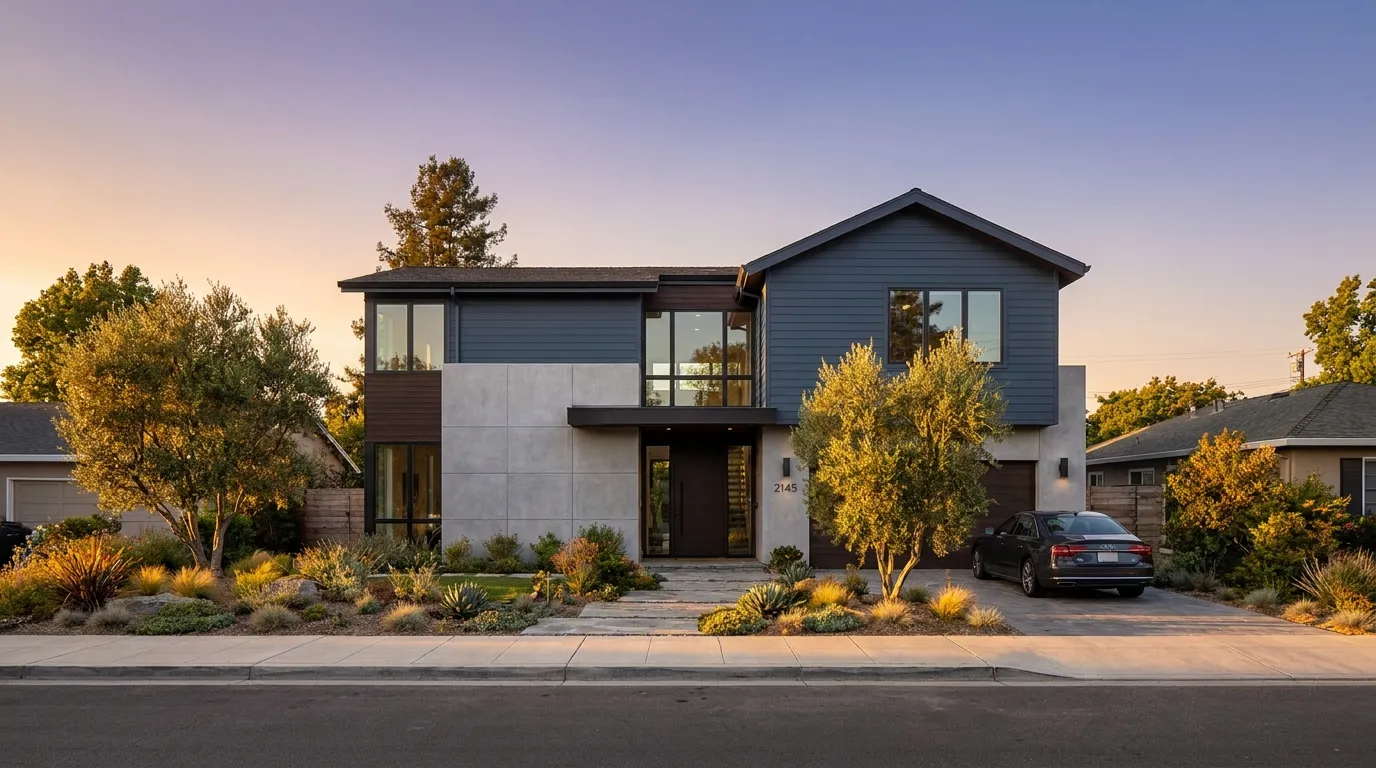
When comparing turnkey vs fixer upper 2026 market dynamics, the "turnkey premium" is a critical metric. This premium represents the additional cost buyers are willing to pay for a property that requires zero immediate renovations. In today's market, turnkey homes typically command a premium of roughly 10% to 20% over comparable fixer-uppers. This markup reflects the value of completed renovations, the elimination of construction risk, and the ability to occupy the property immediately.
Furthermore, recent market data indicates that fully renovated homes often fetch a convenience premium of around 3.7% above their strictly calculated baseline value. Buyers are willing to pay for the certainty of a fixed purchase price, avoiding the unpredictable nature of contractor quotes and supply chain delays. The value of move-in ready home purchases extends beyond the physical upgrades to include immediate utility and risk mitigation.
The Reality of the Fixer-Upper Discount
Conversely, the "fixer discount" is the price reduction applied to homes requiring significant updates. Current data indicates listings explicitly labeled as fixer-uppers trade at approximately 7% to 8% below comparable move-in ready homes.
In high-cost markets, this discount can be even narrower. Limited housing inventory and sustained demand mean that even properties in poor condition command high baseline prices due to their land value and location. Therefore, the assumed savings of buying a fixer-upper must be heavily scrutinized against the actual costs of bringing the property up to modern standards.
The $60,000 Illusion: A Scenario Analysis
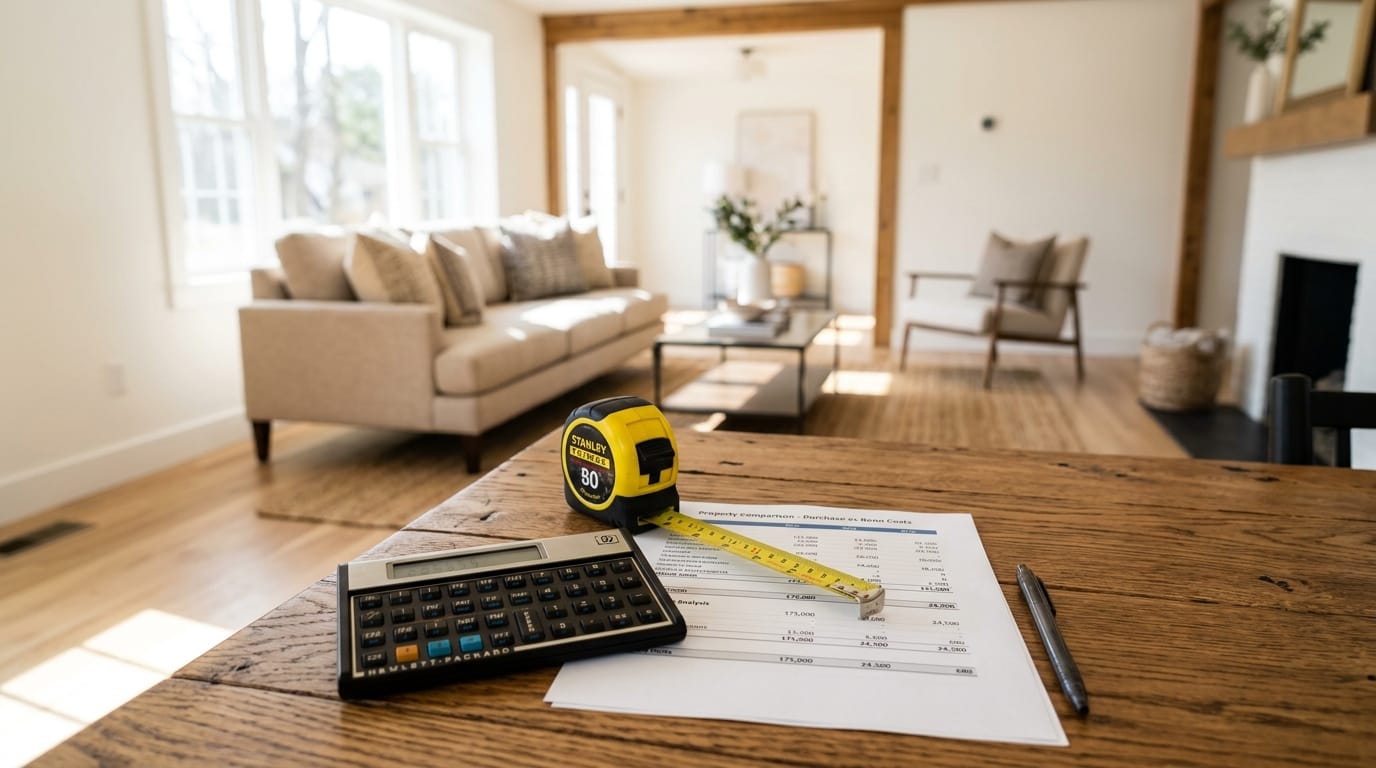
To understand the financial implications, we must look at a practical mathematical scenario. Imagine two houses in the same desirable neighborhood. House A is a turnkey property listed at $350,000. House B is a fixer-upper listed at $290,000. On the surface, the $60,000 price gap appears to be a lucrative opportunity.
However, calculating the true cost of House B reveals a different picture. A standard renovation in 2026 to bring House B to the condition of House A requires modern labor rates: a new roof ($18,500), updated electrical systems ($12,000), a minor kitchen refresh ($32,000), new flooring throughout ($8,000), and interior painting ($5,500). These basic updates total $76,000.
Furthermore, renovations take time. If the property is uninhabitable during a three-month renovation period, the buyer must account for carrying costs. Renting alternative accommodation at $1,800 per month adds $5,400 to the total expense.
Adding the $290,000 purchase price, the $76,000 renovation costs, and the $5,400 carrying costs, the total effective cost of the fixer-upper reaches $371,400. The initial $60,000 "savings" are entirely neutralized by the hard costs of construction and time. In this common scenario, paying the turnkey premium for House A is mathematically superior, saving the buyer $21,400 while mitigating project management risk entirely.
Calculating Renovation ROI in 2026
When analyzing whether a fixer-upper is a viable investment, calculating renovation ROI is paramount. Not all renovations yield a positive return on investment. If the goal is to increase the property's value beyond the cost of the work, buyers and sellers must focus on high-yield improvements.
Data from 2025 and 2026 highlights a distinct trend: exterior projects consistently deliver the highest ROI. For example, a garage door replacement averages between $4,300 and $4,600 but can recoup 260% to 268% of its cost at resale. Similarly, a steel entry door replacement costs roughly $2,400 to $2,500 and returns approximately 216%. Fiber-cement siding replacements, costing around $21,400, yield a 114% return. These high-impact, low-cost exterior updates drastically improve curb appeal and perceived value.
Interior renovations present a more complex ROI landscape. A minor kitchen remodel, averaging $32,000 to $35,000, can recover between 84% and 113% of the investment. This involves cosmetic updates like refacing cabinets, replacing countertops, and upgrading appliances, rather than altering the room's footprint. Conversely, major luxury kitchen overhauls or extensive bathroom additions rarely recoup their full cost. A mid-range bathroom remodel, averaging $26,000 to $29,000, typically offers an ROI between 74% and 93%.
If a fixer-upper requires a complete structural gutting, the math heavily favors the turnkey property. However, if the fixer-upper is structurally sound and only requires high-ROI cosmetic updates, it may present an opportunity to build equity.
Financing and Opportunity Costs
The method of financing also plays a crucial role in the turnkey vs. fixer-upper decision. Turnkey homes can be financed using standard mortgages, locking in a predictable monthly payment at current interest rates.
Fixer-uppers often require alternative financing if the buyer does not have the liquid cash for renovations. Construction loans or renovation mortgages typically carry higher interest rates and require more complex approval processes. The cost of borrowing the renovation funds must be factored into the overall ROI calculation.
Additionally, buyers must consider opportunity costs. The time spent managing contractors, selecting materials, and overseeing a renovation project is substantial. The hours invested in a renovation must be weighed against the immediate utility of a turnkey purchase.
Impact on Property Valuations
The goal of purchasing a home is long-term financial stability and equity growth. Estimated property valuations are heavily influenced by the condition of the home relative to its immediate neighborhood.
If you purchase a fixer-upper in a neighborhood of highly updated homes, strategic renovations can quickly bring your property's valuation up to the neighborhood standard. However, there is a ceiling to this growth. Over-improving a home beyond the standard of the local market will result in diminishing returns. An AVM will cap the property's estimated value based on comparable local sales, regardless of how much capital was injected into luxury renovations.
Conversely, a turnkey home purchased at market value will appreciate alongside the local market rate. If the local market is experiencing steady appreciation, the turnkey home offers a stable, predictable growth trajectory without the injection of additional capital.
Making the Decision: A Framework
To navigate the turnkey vs fixer upper 2026 dilemma, buyers should adhere to a strict mathematical framework:
-
Determine the True Fixer Discount: Calculate the difference between the fixer-upper's asking price and the baseline valuations of comparable turnkey homes in the exact same neighborhood.
-
Itemize Renovation Costs: Obtain localized quotes for all necessary repairs. Add a minimum 15% to 20% contingency fund for unexpected 2026 material inflation.
-
Calculate Carrying Costs: Factor in the cost of alternative housing, storage, and overlapping utilities during the renovation timeline.
Analyze ROI: Evaluate whether the required renovations are high-ROI exterior updates or low-ROI structural changes.
-
Compare the Totals: If the purchase price plus total renovation costs (including contingency) and carrying costs is equal to or greater than the turnkey premium, the mathematical advantage shifts to the move-in ready home.
In the 2026 housing market, purchasing a fixer-upper requires precise calculation and an understanding of local renovation costs. Analyzing the value of move-in ready home options reveals that the turnkey premium is often a calculated payment for certainty, immediate utility, and protection against escalating construction costs. By prioritizing objective data, calculating renovation ROI accurately, and relying on strict mathematical models, buyers can make informed decisions that protect their capital and ensure long-term housing stability.