The Aluminum Wiring Penalty: How 1970s Electrical Codes Trigger $15,000 Escrow Concessions
The Factual Summary
If your home was built between 1965 and 1973, it might contain single strand aluminum wiring. While your lights may work perfectly, modern home insurance companies routinely refuse to cover this outdated material. Without an active hazard insurance policy, a buyer cannot secure a mortgage, which will immediately freeze your transaction. Panicked buyers often demand up to fifteen thousand dollars in escrow concessions for a complete copper rewire to save the deal. You can protect your seller net proceeds by auditing your electrical panel before listing. Completing a certified AlumiConn pigtail retrofit costs a fraction of a full rewire and provides the exact remediation certificate underwriters require to approve the sale.
A working light switch in a 1971 ranch home can still stall your mortgage closing and cost you $10,000 to $15,000 in last minute buyer concessions. Roughly 2 million U.S. homes built between 1965 and 1973 contain single strand aluminum branch circuit wiring, a material builders used when copper prices spiked. You may have lived in your home for decades without a single tripped breaker. Once your property goes under contract, however, modern home insurance underwriters treat unremediated aluminum wiring as an automatic coverage blocker, freezing your buyer's loan mid-escrow and handing all pricing leverage to the buyer.
Understanding how insurers and lenders view this wiring before you list turns a chaotic closing delay into a predictable, manageable line item on your net proceeds sheet.
Why Home Insurance Carriers Freeze Closings
Many sellers assume that if a home has passed local living standards for 50 years, a lender will clear it for sale. In current transactions, the roadblock is rarely a city building inspector. The real blocker is the buyer's homeowner insurance company.
Because older aluminum wiring poses a known fire risk as connections loosen over time, modern insurers actively flag it during inspections. Unlike the thicker aluminum cable still used safely for main service lines entering a house, 1960s and 1970s solid aluminum branch wire expands and contracts roughly 36% more than copper whenever appliances cycle on and off. Over decades of heating and cooling, those connections gradually loosen at outlet screws, creating electrical resistance and heat behind the walls.
Due to historical property damage claims and liability risks, major carriers including State Farm, Allstate, USAA, and Liberty Mutual routinely deny new policies or issue non-renewals for unremediated aluminum branch wiring.
During the buyer's inspection period, home inspectors are required to flag solid aluminum wiring as a safety defect needing correction. Once that report or a standard 4 point insurance inspection reaches the carrier's desk, the insurer withholds the policy binder. Even though Fannie Mae and the FHA do not ban aluminum wiring outright, no mortgage lender can fund a buyer's loan without active hazard insurance in place before closing. When insurance binders are delayed by wiring disputes, the buyer's mortgage rate lock can expire. This triggers costly rate extension fees and pushes closing timelines back by 14 to 30 days, placing immense pressure on the seller to accept a massive price reduction.
Why Quick Fixes Fail Inspection and Underwriting
Sellers who check their electrical panel before listing sometimes hire an electrician to swap out visible outlets and switches for aluminum compatible (CO/ALR rated) devices. This approach typically spends $500 to $1,500 across a typical house. Others rely on past repairs made with twist on wire nuts and antioxidant paste. While the national electrical code requires switches and outlets on aluminum circuits to carry proper ratings, swapping visible wall plates does not satisfy federal safety standards or current insurance underwriting checklists.
A basic outlet swap leaves hidden wire splices inside ceiling light boxes, attic junction points, hardwired appliances, and the main breaker panel untouched. Insurance 4 point inspection forms explicitly reject twist on wire nuts and partial outlet replacements.
To lift an underwriting hold, carriers demand a formal remediation certificate signed by a licensed electrician. This letter must confirm that every aluminum to copper connection in the home has been permanently corrected using one of three federally recognized methods: full copper rewiring, specialized hydraulic crimping (COPALUM), or multi-port screw connectors (AlumiConn). Sellers who pay for partial outlet swaps before listing often end up paying twice when the buyer's insurer demands full home certification.
Comparing Repair Costs Against $15,000 Buyer Demands
The gap between what a certified repair actually costs and what a buyer demands in escrow comes down to timing and contractor availability. When a buyer's inspector flags aluminum wiring with only ten days left in an inspection window, the buyer rarely shops around for the most economical certified fix. Instead, buyers typically pull a bid for a whole house copper rewire to anchor their price cut request.
Whole house copper rewiring averages $15,000 to $30,000 nationally, or roughly $8 to $15 per square foot depending on how easily an electrician can access the walls. Accessible 1,500 to 2,000 square foot single story homes can sometimes be rewired for $12,000 to $15,000. Two story homes requiring extensive drywall cutting and patching routinely climb to $25,000 or more.
Municipal electrical permits add $250 to $1,000, and bundling an outdated breaker panel upgrade adds another $2,000 to $4,000. Faced with those estimates mid escrow, buyers routinely demand a $10,000 to $15,000 price reduction or repair credit.
Certified pigtailing methods cost far less because they leave the existing aluminum wire safely behind your drywall while creating a permanent copper transition at every connection point. The first option, COPALUM, uses a specialized high pressure crimping tool to bond copper pigtails directly to the aluminum wire, typically costing $3,000 to $8,000 for a full home. The practical catch for sellers is contractor scarcity. Electricians must hold a specific certification and lease the proprietary crimping tool, leaving many metro areas with few or no available installers on short notice.
AlumiConn connectors solve that scheduling bottleneck. Recognized by federal safety regulators as the approved alternative when COPALUM is unavailable, AlumiConn connectors isolate the aluminum and copper wires in separate screw chambers filled with anti-oxidant compound. Whole-home AlumiConn retrofits generally run $2,000 to $5,000 for standard homes. This scales to $7,500 to $12,000 for larger properties over 2,500 square feet with high fixture counts. Even at the top end, completing an AlumiConn retrofit before you list costs a fraction of a full copper rewire and removes the buyer's justification for a $15,000 price cut.
Why Closing Credits Cannot Solve an Insurance Hold
In most repair negotiations, sellers prefer offering a closing cost credit rather than coordinating contractors before moving day. With aluminum branch wiring, a seller credit usually fails to keep the sale on track.
Under 2026 mortgage rules, seller paid closing concessions are strictly capped at 6% of the purchase price for FHA and USDA loans, 4% for VA loans, and between 3% and 9% for conventional Fannie Mae and Freddie Mac loans depending on the buyer's down payment. Even more importantly, lending guidelines prohibit buyers from pocketing unused seller credits as cash at the closing table, and credits can only offset allowable loan fees and prepaid taxes or insurance.
They cannot pay an electrical contractor after closing. If the buyer's insurer refuses to bind a policy until the wiring is fixed, a $12,000 closing credit leaves the lender unable to fund the loan. You are left choosing between delaying closing while scrambling for a permitted electrician or canceling the contract and re-listing with a known material defect that must be disclosed to every future buyer.
Protecting Your Net Proceeds Before Listing
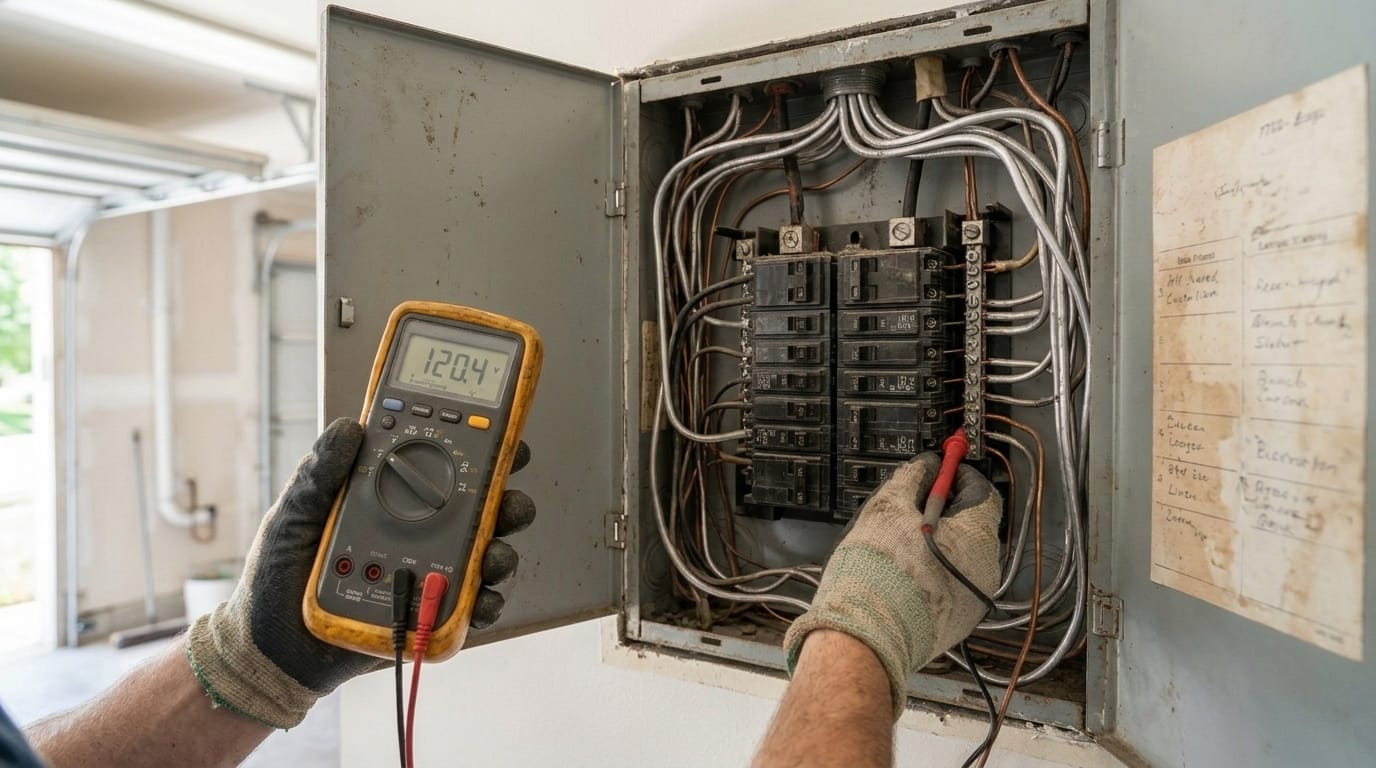
Sellers with homes built between 1965 and 1973 can protect their equity by treating electrical verification as a pre-listing accounting step rather than a surprise inspection fight. Before you lock in a list price, have a licensed electrician open your main panel and sample a few outlets to confirm whether solid aluminum branch circuits are present.
If aluminum wiring turns up, completing a permitted, full home AlumiConn or COPALUM retrofit upfront turns an unpredictable $15,000 buyer negotiation risk into a fixed $2,000 to $5,000 preparation cost.
Keeping your municipal permit signoff and a detailed electrician's certification letter listing every remediated circuit lets your buyer secure a hazard insurance binder on the first try. You can also factor local electrical code requirements and repair outlays directly into your baseline estimated property valuation before going to market. Factoring your certified electrician's estimate into your baseline net sheet helps you protect your equity before listing. You can utilize the eppraisal platform to review baseline valuations and securely model those physical contractor costs against your net closing proceeds, ensuring your pricing floor reflects real transaction math before an inspector ever walks through the door. For sellers weighing other closing deductions alongside electrical prep, checking how tax proration costs affect final settlement sheets gives you a clearer picture of your true net equity.
FAQs
No. Eppraisal is an AI-powered software platform. It does not list properties, represent buyers or sellers, or facilitate transactions. It provides analytical tools and data context to help you make more informed real estate decisions independently, giving you the clarity needed to understand property values without acting as a licensed financial appraisal service.
Modern insurance carriers frequently deny coverage because older solid aluminum wiring expands and contracts significantly more than copper wire. This movement gradually loosens connections at your outlets and switches, which creates electrical resistance and a known fire hazard over time. Remediating these connections is required to secure a standard homeowner policy.
A complete copper rewire generally costs between fifteen thousand and thirty thousand dollars, requiring extensive drywall removal and labor. In contrast, an AlumiConn pigtail retrofit typically costs two thousand to five thousand dollars. This approved method safely connects copper to the existing aluminum wire, satisfying underwriting standards without destroying your walls.
Discovering unremediated aluminum wiring mid-escrow often causes panicked buyers to demand massive price reductions or immediate seller concessions. By proactively auditing your electrical system and securing a licensed electrician's remediation certificate before listing, you establish a defensible pricing floor. This preparation protects your final net proceeds from unexpected fifteen thousand dollar deductions.
The Core Takeaway
New federal environmental rules are phasing out the legacy chemical coolant (R-410A) used in most residential air conditioners. While your existing system remains perfectly legal to run, a simple parts breakdown could now trigger a complete $9,000 to $16,000 system replacement. This is because
The Summary
Active buyers face significant financial liabilities when purchasing homes with unpermitted additions, converted garages, or finished basements. Because county assessors and mortgage lenders strictly exclude unpermitted spaces from official Gross Living Area (GLA) calculations, buyers are exposed to immediate valuation shortfalls and lender escrow holdbacks. Resolving these code