The Well Yield Cliff: How Water Flow Underwriting Mandates Threaten Rural Home Purchases
The Factual Summary
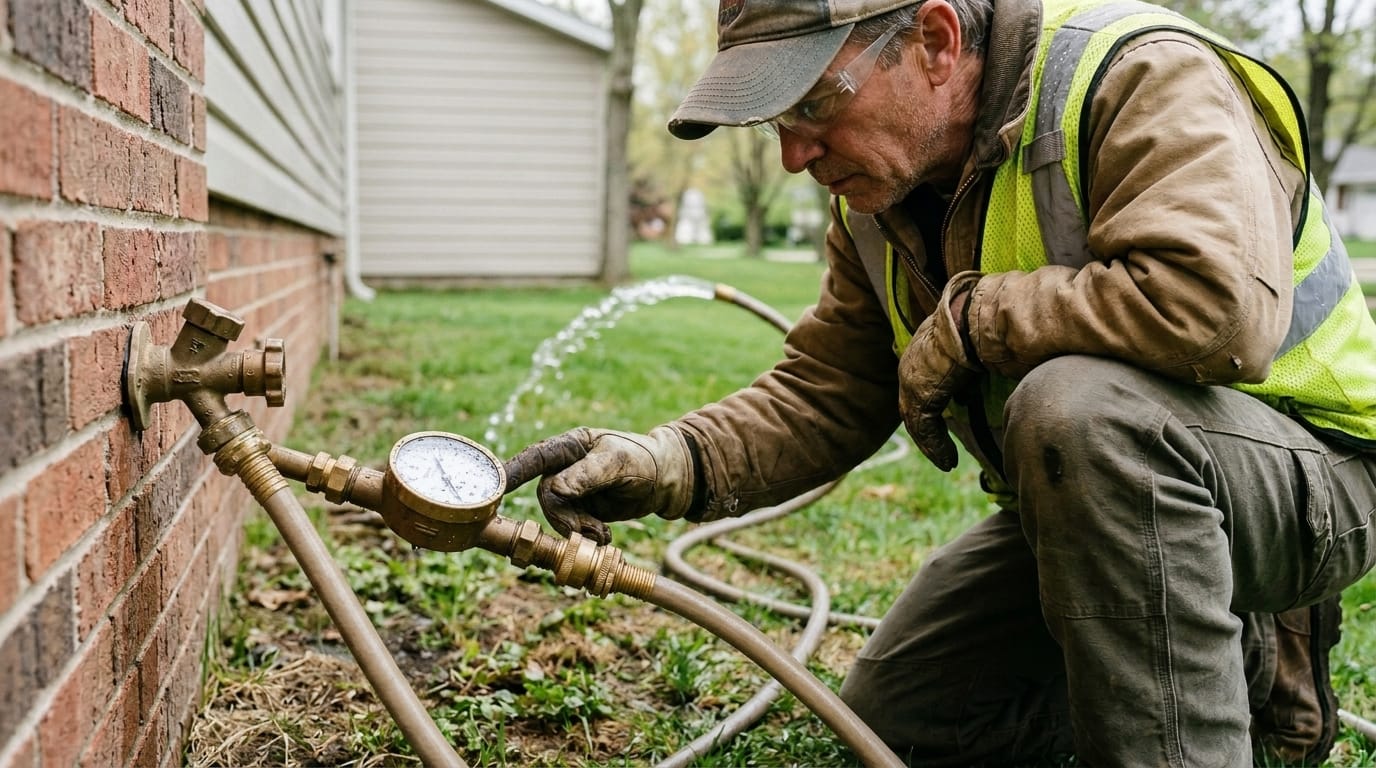
When buying a rural home, your mortgage hinges on the property's private well. Federal lenders require the well to continuously pump 3 to 5 gallons of water per minute for several hours. If it fails this flow test, your loan is frozen until you negotiate a $4,000 to $25,000 fix, like hydrofracking or drilling a new well.
During rural mortgage underwriting, standard purchase financing can freeze instantly if a private well fails continuous flow and safety benchmarks. While home buyers naturally focus on visible property features like roofs or foundation walls, mortgage lenders evaluate water supply as an essential condition of habitability. Federal lending guidelines from the Federal Housing Administration and secondary mortgage market rules from Fannie Mae and Freddie Mac enforce strict minimum flow rates. Wells must sustain three to five gallons per minute across a continuous 3 to 4 test. When output falls short, lenders pause loan commitments, leaving buyers facing unexpected remediation costs ranging from $4,000 to over $25,000 before title can legally transfer.
Immediate Pressure vs. Sustained Well Recovery
Understanding water flow underwriting requires distinguishing between immediate faucet pressure and sustained well recovery. A standard 6 inch drilled well casing holds roughly 1.5 gallons of standing water per vertical foot. In a well drilled to 300 feet where the resting water level sits 50 feet below the surface, the borehole pipe stores nearly 375 gallons of standing reserve. When a prospective buyer or general home inspector runs a sink or tub for 10 or 15 minutes, the home plumbing simply drains this standing column. That brief check reveals nothing about how quickly the surrounding ground refills the well once that reserve is gone. Mortgage underwriters recognize this critical gap. To confirm a household can run essential appliances, bathe, and maintain daily sanitation without exhausting the water source, lenders require a continuous pumping test that drains the standing column and measures sustained ground recharge.
Federal Flow Rate Benchmarks and Property Age Rules
Under federal lending standards, required flow rates depend directly on property age. For newly constructed homes, the water system must deliver at least 5 gallons per minute continuously throughout a 4 hour test. For existing homes, underwriting standards require 3 to 5 gallons per minute across 3 to 4 continuous hours. Crucially, output cannot drop below 3 gallons per minute during the final hours of the testing period. If flow declines sharply toward the end of the test, underwriters classify the well as an unstable water source and halt loan approval. While conventional lenders check local county health department rules first, they defer directly to these federal benchmarks whenever local ordinances are vague or unstated.
Conditional Financing and Auxiliary Storage Rules
Producing between 1 and 3 gallons per minute does not automatically kill a transaction, but it triggers mandatory financing conditions. Under federal guidelines, wells producing between 1 and 3 gallons per minute can only qualify for financing if an engineered auxiliary storage system balances daily peak household consumption. Specifically, lenders require dedicated storage tanks providing at least 720 gallons of usable water for an existing home across a 4 hour window, or 1,200 gallons for new construction. Conversely, wells producing less than 1 gallon per minute represent an uninsurable physical failure under nearly all standard loan programs. When production drops below that baseline, underwriters halt processing until contractors complete physical remediation or drill a new source to restore acceptable recovery rates.
Certified Drinking Water Testing and Laboratory Clearance
Water volume represents only half of the underwriting equation. Lenders also require certified laboratory testing to confirm the water supply meets basic drinking standards. Unlike public municipal water that undergoes continuous treatment and testing by a municipal utility, private well maintenance rests entirely on the property owner. Lenders require drinking water test panels to evaluate total coliform bacteria, nitrates, nitrites, lead, turbidity, and pH balance. In agricultural areas, seasonal fertilizer runoff frequently pushes nitrate levels past allowable health thresholds. In older installations, cracked surface sanitary seals or loose caps allow surface rainwater and biological contaminants into the supply. A positive laboratory result for coliform bacteria or heavy metals stops loan processing just as quickly as a dry well. Resolving potability failures requires shocking the casing with chlorine, installing ultraviolet purification systems, or adding specialized filtration, followed by a certified re-test that typically adds one to two weeks to closing schedules.
The Inspection Calendar and Due Diligence Windows
The most common contractual trap for active buyers is the inspection calendar. Standard purchase agreements typically provide a 10 to 14 day window to complete physical property due diligence. However, conducting a valid 3 to 4 hour continuous flow test requires a licensed well contractor rather than a general home inspector. In rural regions, specialized well contractors frequently face booking backlogs of 1 to 2 weeks. Furthermore, certified drinking water laboratory cultures require 3 to 7 business days to incubate and process. Buyers who wait to order well testing until after receiving their general inspection report often find their contingency period expiring before the lab report arrives, placing their earnest money deposit directly at risk.
Seasonal Weather Cycles and Aquifer Shifts
Seasonal weather cycles create an additional layer of financial risk that a single snapshot test can miss. Aquifer water tables shift significantly throughout the calendar year. During early spring, snowmelt and heavy rains saturate surrounding soil, temporarily raising the water table. A well tested in April might easily produce 4 gallons per minute because shallow moisture assists recovery. If the transaction closes in late August after weeks of summer heat, that same well may drop below the mandatory 3 gallon per minute threshold. When negotiating a purchase during wet spring months, buyers should request the original well completion log recorded with the local county water resources board. That historical document records original drilling depth, static water level, and the sustained yield verified when the well was first established.
Remediation Paths and Contractor Costs
When a continuous flow test reveals production deficits, parties must evaluate specific repair options and contractor costs. Physical remediation generally follows three distinct paths. For bedrock wells suffering from mineral buildup or pinched rock seams, hydrofracking represents the most common initial step. Contractors use specialized high pressure water injection to open surrounding bedrock fractures and clear direct pathways to active water veins, often restoring output without requiring a new drill site. Standard hydrofracking services generally cost between $1,500 and $4,500, though complex setups in deep rock formations can reach $4,000 to $8,000. While hydrofracking succeeds in roughly 70% to 80% of applications, it cannot generate water if the surrounding regional water table has dropped significantly.
For wells with stable but limited recovery between 1 and 3 gallons per minute, adding an engineered auxiliary cistern provides a dependable solution to satisfy lender storage guidelines. The well pump slowly transfers water into a 1,000 to 1,500 gallon polyethylene holding tank managed by low flow float switches, protecting the pump from overheating. A secondary pump then draws water from the holding tank to pressurize the interior plumbing fixtures at standard domestic pressure. Installing a fully permitted storage cistern, complete with sanitary backflow prevention and distribution equipment, generally costs between $6,000 and $12,000.
The most costly resolution involves drilling a replacement well or deepening an existing borehole. Well drilling contractors bill based on total linear depth, with rates averaging $25 to $65 per foot for residential drilling, casing, and annular sealing. Factoring in surface casing, submersible pump equipment, electrical trenching, and plumbing hookups, a new 200 to 400 foot well requires an investment of $15,000 to $25,000. In dense rock or when drilling beyond 500 feet, total costs can surpass $35,000. Heavy drilling rigs also require clear site access and municipal health permits, introducing construction delays of three to six weeks that standard purchase contracts cannot easily absorb.
Contract Contingencies and Escrow Holdback Protections
Protecting transaction timelines and repair capital requires building clear contingencies directly into the purchase contract. Buyers should avoid relying on generic inspection clauses and instead insert a dedicated well inspection addendum specifying a 3 to 4 hour continuous flow test and a comprehensive certified drinking water panel. Setting an inspection contingency window of 18 to 21 days provides contractors and testing laboratories sufficient time to deliver verified reports. Contracts should explicitly establish that if flow rates miss lender minimums or water samples fail safety thresholds, the seller must complete licensed repairs or credit the buyer at closing. Concurrently, sellers benefit from conducting independent flow and potability tests prior to listing, which prevents unexpected underwriting pauses and protects net equity from last minute renegotiations. When repairs cannot be completed before closing, parties can negotiate an escrow holdback of 150% of licensed contractor estimates. This arrangement allows title to transfer while repair funds remain securely held by the settlement agent until certified re-testing proves the water supply is flowing and safe.
FAQs
Eppraisal analyzes publicly available property and market data to generate Estimated Property Valuations and plain-English qualitative insights for real estate consumers. Instead of just returning a single valuation number, our AI software platform explains the specific infrastructure, municipal, and economic factors actively driving a property's estimated value.
Lenders use the HUD 4000.1 minimum to ensure the property has enough water for safe, daily living. If a private well cannot continuously pump three to five gallons per minute, underwriters will freeze your loan approval until the water system is physically repaired or replaced.
A clean water test is a mandatory condition for securing your rural mortgage. Lenders require certified lab testing for common bacteria, nitrates, and lead. If harmful contaminants are found, your loan is stopped until you install proper filtration systems and pass a certified re-test to verify safety.
If your flow rate fails, you can negotiate an escrow holdback to cover certified contractor remediation costs before closing. Common physical fixes include hydrofracking for $4,000 to $8,000, adding a dedicated storage cistern for $5,000 to $10,000, or drilling a completely new well for $15,000 to $25,000.
The Summary
Selling a home in a designated wildfire zone means you must pass a defensible space inspection and disclose property hardening updates before closing. Waiting until a buyer requests these mandatory point of sale certifications often leads to expensive rush fees, closing delays, or strict buyer concession demands. By
The Core Takeaway
While interest rate fluctuations often dominate national news cycles, the stability of the suburban housing market is largely dictated by local administrative timelines. The multi-step process required for zoning, environmental reviews, and infrastructure permits creates a structural lag in new home construction. This steady, regulated pace
The Bottom Line
In today's real estate market, elevated buyer caution and rising contract cancellation rates have turned home inspections into secondary price negotiations. Recent transaction data shows that nearly half of all home sales now include some form of seller concession, with buyers of properties fifteen years